That sharp bang or crack you hear when the heat kicks on is a ductwork popping noise when the heat turns on — and it’s one of the most common HVAC complaints homeowners report. In most cases, it comes down to one of four identifiable causes. This article will help you figure out which one applies to your situation, then walk you through the right fix.
Disclosure: This article contains affiliate links. If you purchase through these links, we may earn a small commission at no extra cost to you. As an Amazon Associate, we earn from qualifying purchases.
Why Ductwork Makes a Popping Noise When the Heat or AC Turns On
Sheet metal ducts expand slightly when warm air flows through them and contract when they cool down. That movement is completely normal. Under normal conditions, you might hear a subtle tick or two — nothing dramatic.
When the noise is sharp and loud, something is amplifying that movement. Either the metal is flexing more aggressively than it should, air pressure inside the system is physically pushing against duct walls, or a section of ductwork is shifting and hitting something nearby.
The timing, location, and character of the sound are your first diagnostic clues. A pop at startup behaves differently from a bang at shutdown, and both point toward different causes.
The Most Common Causes of a Ductwork Popping Noise When Heat Turns On
These causes are distinct. Identify which one matches your situation before attempting any fix.
Cause 1: Thermal Expansion in Thin or Cheaply Made Ducts
This is the most common cause of ductwork popping noise when the heat turns on. Thin-gauge sheet metal flexes aggressively as it heats and cools. The pop is the metal snapping to a new position under thermal stress.
Signs this is your cause:
- The noise comes from the same spot every cycle
- It happens right at startup in heating mode, or at shutdown when the system stops
- The sound is more pronounced in winter than summer
- The duct is exposed in an unconditioned space like an attic or crawlspace
Cause 2: High Static Pressure Forcing Duct Walls to Flex
Static pressure is the resistance the blower motor pushes against to move air through the duct system. When restricted airflow occurs — from a clogged filter, blocked return register, or undersized ductwork — pressure builds up inside the system. That pressure physically pushes against duct walls and causes them to buckle and pop. Restricted airflow also causes other problems, including frozen evaporator coils.
This cause matters more than the others because it signals a real problem. Chronic high static pressure strains the blower motor. It also reduces system efficiency over time.
Signs this is your cause:
- The popping is loud and happens consistently at startup
- Airflow from registers feels weaker than usual
- Your filter hasn’t been changed recently
- Furniture or rugs are blocking a return air register
Cause 3: Loose Duct Sections or Failed Connections
Ducts that aren’t firmly joined or properly supported will shift and bang against surrounding structure when the system cycles. Unlike thermal expansion noise, this type of duct banging noise tends to be less predictable. It often includes a rattle or vibration alongside the bang.
Signs this is your cause:
- The noise varies — sometimes louder, sometimes quieter
- There’s a rattling quality alongside the bang
- You can see a duct joint that looks separated or poorly supported in the basement, attic, or crawlspace
Cause 4: Duct Rubbing Against Wood Framing or Joists
As the duct expands thermally, it can rub against a floor joist, wall stud, or framing member. This produces a sharp crack or squeak rather than a deep thud. It’s especially common in attic duct runs where ducts pass through or rest against framing.
Signs this is your cause:
- The noise sounds more like a crack or squeak than a bang
- It’s consistent and comes from a specific point in the ceiling or wall
- The duct is visible running close to or through wood structure
How to Find Which Part of Your Duct System Is Making the Noise
Work through this sequence before applying any fix.
Step 1: Listen through a full cycle. Stand in the house during startup and shutdown. Note whether the loud popping sound from vents happens when the system turns on, turns off, or both. Startup noise points toward pressure buildup or rapid expansion. Shutdown noise is almost always thermal contraction.
Step 2: Walk the house and locate the noise. During the next cycle, move through each room and listen. Narrow it down to a room, then find the nearest supply register or visible duct run. The closer you can get to the source, the easier the diagnosis.
Step 3: Pull and inspect the air filter. A heavily loaded filter is the fastest indicator of high static pressure. If the filter is dark gray and clogged with debris, replace it before doing anything else. For most residential systems, a filter in the MERV 8–11 range balances filtration with adequate airflow.
Step 4: Check all return air registers. Make sure no return registers are blocked by furniture, rugs, or stored items. Blocked returns are a common and overlooked driver of high static pressure.
Step 5: Run the system again after making these changes. If the popping stops or significantly reduces, restricted airflow was the cause and you’ve fixed it. If the noise continues, the issue is structural — expansion, loose connections, or duct contact with framing — and you move to the fixes below.
DIY Fixes That Stop Ductwork Popping in Most Homes
Match the fix to the cause you’ve identified. Don’t apply all of these at once.
For Thermal Expansion in Thin Ducts
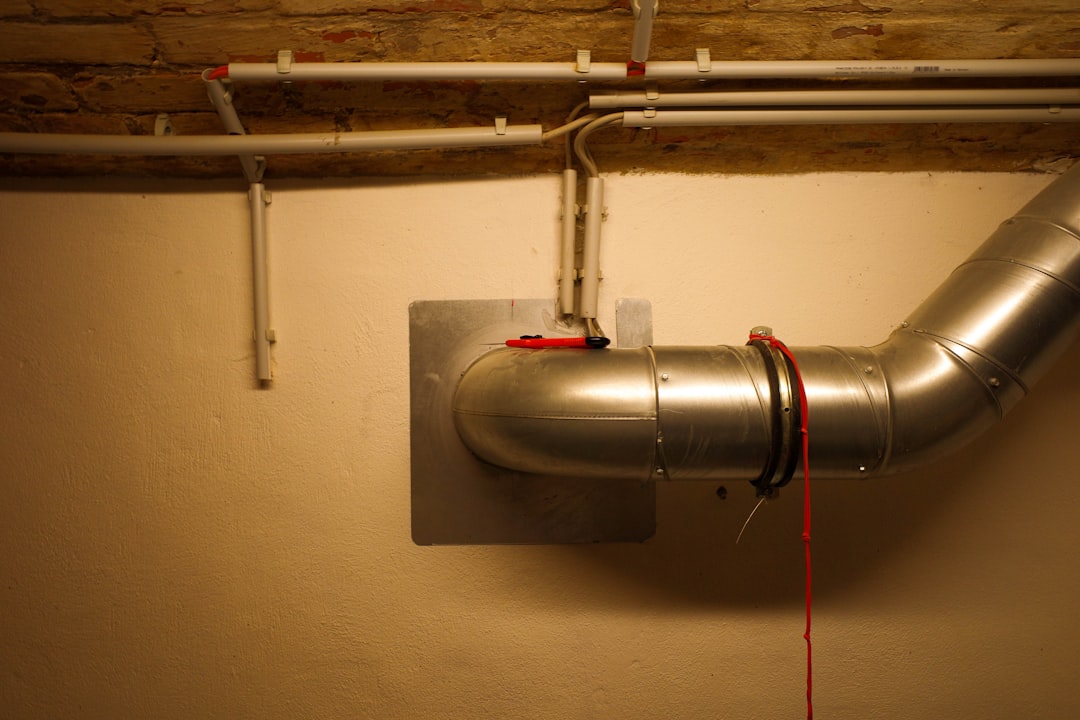
Wrap the noisiest duct section with flexible duct wrap insulation or rigid fiberglass duct board. Insulation slows the rate of temperature change. That reduces how fast and forcefully the metal expands. This is the most practical DIY fix for duct expansion and contraction noise. Focus on runs in unconditioned spaces where the temperature swing is greatest.
For Loose Duct Sections
Inspect accessible duct joints in the basement, crawlspace, or attic. Look for sections that have pulled apart or are only held by deteriorated tape. Reseal them with metal foil HVAC tape — not standard duct tape. Despite the name, regular duct tape is not rated for HVAC temperature cycling. It will fail within a season or two. Foil tape bonds properly and holds up to repeated heat and movement.
For Duct Contact With Framing
Where the duct touches or passes through wood, slide a strip of foam pipe insulation or adhesive foam weatherstripping between the duct surface and the wood. This cushions the thermal movement and stops the cracking sound without restricting airflow. Both materials are inexpensive and available at any hardware store.
For High Static Pressure After Basic Fixes
If you’ve replaced the filter and cleared the returns and the HVAC duct banging noise continues, the duct system itself may be undersized for your equipment’s output. That’s a design problem, not a homeowner fix. See the next section.
When Duct Popping Is a Sign of a Bigger HVAC Problem
Persistent popping after airflow fixes suggests chronically high static pressure from an undersized duct system. This is a real long-term problem. It stresses the blower motor and reduces heating and cooling efficiency. It can also shorten equipment life.
If the popping is loud and frequent, and you’re also seeing reduced airflow or higher-than-expected energy bills, call an HVAC technician and ask for a static pressure test. This is a standard diagnostic measurement — not an emergency service call — but it requires specialized equipment and is not a homeowner-level fix.
Stop using the system and call a technician if:
- The noise is accompanied by a burning smell
- You see scorched or damaged duct insulation near the furnace
- The popping occurs near a gas furnace along with any smell of gas or combustion
These are separate issues that should not be self-diagnosed.
How to Prevent Ductwork Popping Noise From Coming Back
- Replace filters on schedule. Every one to three months, depending on your system and household conditions. A clean filter is the single most effective way to keep static pressure under control.
- Keep return registers clear. Check them when you rearrange furniture. A blocked return puts immediate stress on the whole system.
- Insulate ducts in unconditioned spaces. Attic and crawlspace ducts experience the largest temperature swings. Insulating them reduces how aggressively the metal expands and contracts on each cycle, which directly reduces noise over time.
- Schedule annual HVAC maintenance. A technician who checks static pressure and duct condition once a year can catch undersizing or connection failures before they become expensive repairs.
A ductwork popping noise when the heat turns on is almost always traceable to one of these four causes. Get the diagnosis right and the fix is usually straightforward.
Frequently Asked Questions
Is ductwork popping dangerous? In most cases, no. Thermal expansion and loose duct connections are mechanical issues that don’t create safety risks. However, if the noise comes with a burning smell or occurs near a gas furnace, stop using the system and call a technician.
Why does my ductwork pop loudly in winter but not summer? Heating mode creates a larger temperature swing than cooling mode. The metal expands more quickly and more forcefully when the system shifts from a cold idle to pushing hot air. That faster expansion is what produces the louder pop.
Can I fix duct popping myself or do I need an HVAC technician? Most causes are DIY-friendly. Replacing a clogged filter, clearing blocked returns, resealing loose joints with foil tape, and insulating duct runs are all homeowner-level fixes. If those steps don’t resolve the noise, call a technician for a static pressure test to check for undersized ductwork.