If your AC is running but not cooling the house, you’re not alone — this is one of the most common summer service calls. When your AC is not cooling in summer heat, the instinct is to call a technician immediately. But most summer cooling failures come down to a short list of diagnosable causes, several of which require no tools at all. This guide walks you through a logical sequence from the simplest checks to the most serious. Some causes do require a professional, and the article will tell you clearly when to stop and make that call.
Disclosure: This article contains affiliate links. If you purchase through these links, we may earn a small commission at no extra cost to you. As an Amazon Associate, we earn from qualifying purchases.
The 7 Things to Check When Your AC Is Not Cooling in Summer Heat
Before diving into the detail, here’s the full sequence at a glance:
- Thermostat settings
- Vents and return air grilles
- Circuit breaker
- Air filter
- Outdoor condenser unit
- Electrical and control issues (outdoor unit not running, thermostat calibration)
- Refrigerant or mechanical failure signs
Work through these in order. The first three take under five minutes and no tools. The later checks build on what you’ve already ruled out.
Why Your AC Is Not Cooling in Summer Heat
Two distinct situations cause cooling performance to drop in peak heat. Knowing which one applies to you shapes everything that follows.
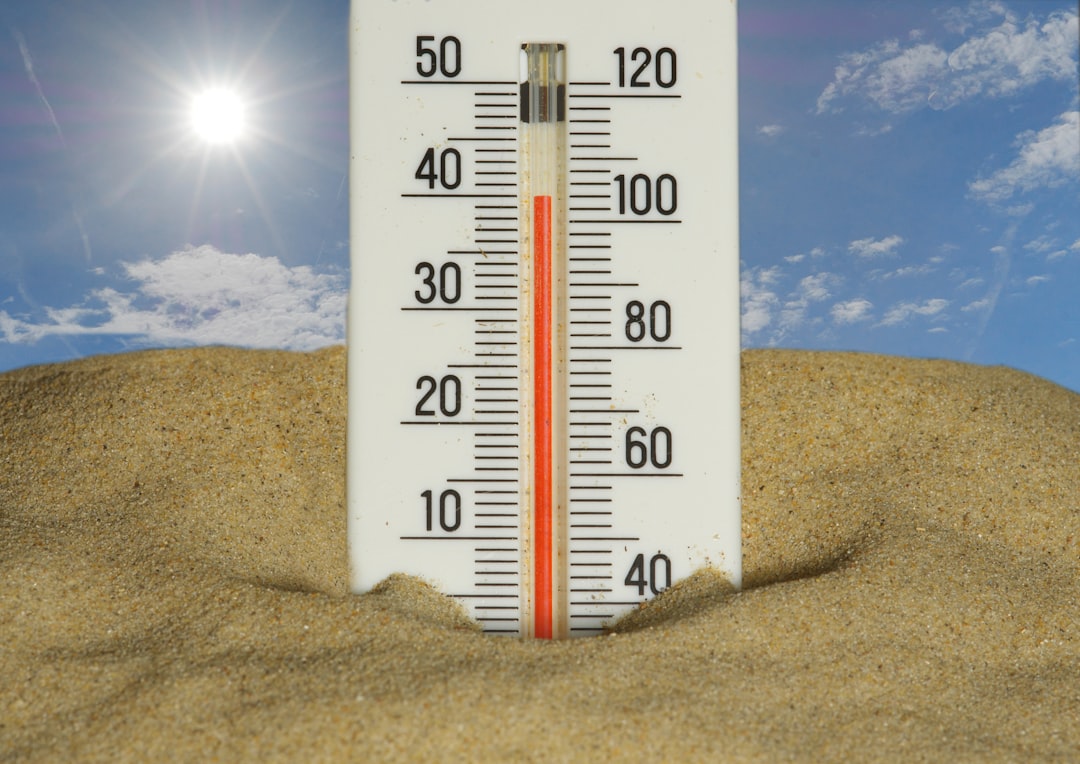
The demand exceeds what the system was designed to handle. Residential AC systems are sized for a regional design temperature — typically 95–100°F depending on your climate. When outdoor temperatures push past that threshold, even a healthy, well-maintained system may struggle to keep pace. This is not a failure. It’s a capacity limitation. If this sounds like your situation, you may be dealing with a case of central AC not keeping up with heat rather than an actual fault.
An existing problem becomes visible under load. A partially blocked filter or mildly dirty coil that barely mattered in June becomes a genuine failure point when the system is running hard in August. Heat stress exposes weaknesses that cooler weather was masking.
Here’s how to quickly tell them apart. If your AC struggled only during the most extreme heat days — above 95–100°F — and performed fine earlier in the season, demand is the likely explanation. If it’s failing on ordinary summer days at 85°F or 88°F, something is actually wrong. Keep this distinction in mind as you work through the checks below.
Start Here: Quick Checks Before You Touch Anything
These three checks require no tools and take less than five minutes. They resolve a meaningful percentage of AC not cooling complaints.
Check 1: Thermostat Settings
- Is the system set to COOL, not just FAN? Fan-only mode circulates air without cooling it.
- Is the set temperature actually below the current indoor reading? If the thermostat is set to 74°F and the house is at 72°F, the system won’t run.
- Has a programmed schedule changed or been overridden without your knowing?
- If your thermostat runs on batteries, replace them. Low batteries cause erratic behavior and missed calls for cooling.
Check 2: Vents and Return Air Grilles
Walk every room. Supply vents — the ones blowing air — should be open and clear of furniture, rugs, and drapes. Then find your return air grille, typically a large grille on a wall or ceiling, and make sure nothing is blocking it. A blocked return starves the entire system of airflow, and cooling drops across the whole house.
Check 3: The Circuit Breaker
A tripped breaker can leave the indoor air handler running while the outdoor condenser sits completely off. Air moves through your vents, but nothing is cooling it. Check the breaker panel for both the indoor and outdoor unit breakers. If one is tripped, reset it once. If it trips again immediately, stop. Do not reset it again. Call a technician. A repeatedly tripping breaker signals an electrical problem that needs professional diagnosis.
If any of these were the issue, allow 15–20 minutes after correcting it before evaluating whether cooling has improved.
Dirty or Blocked Components Causing AC Not Cooling in Summer Heat
This is the most common category of fixable problems. Each cause is distinct — work through them one at a time.
Air Filter
A clogged air filter is the single most common cause of an air conditioner not cooling a house adequately. When airflow is severely restricted, the evaporator coil — the indoor component that absorbs heat from your air — gets too cold and freezes over. A frozen coil cannot absorb heat. Cooling stops.
How to check: Pull the filter out and hold it up to a light source. If you can’t see light through it, replace it.
For most homes, a standard 1-inch pleated filter rated MERV 8 to 11 is the right choice. MERV stands for Minimum Efficiency Reporting Value — it measures how well a filter captures particles. Note that higher MERV ratings of 13 and above can restrict airflow in older systems not designed for dense media filters. Stick to MERV 11 or below unless your system documentation specifies otherwise.
After replacing a clogged filter: If you suspect the coil has frozen — ice visible on the copper lines near the air handler — switch the system to FAN-only for 30–60 minutes to let it thaw. Then switch back to COOL. Running it on COOL with a frozen coil prolongs the problem.
Outdoor Condenser Unit
The condenser — the large unit outside your home — releases heat absorbed from inside your house into the outdoor air. If it’s blocked or coated in debris, it can’t transfer heat effectively. Cooling capacity drops noticeably. This is one of the most overlooked reasons for AC running but not cooling in hot weather.
How to check: Go outside and look at the unit. Is vegetation crowding it on any side? Is the metal coil visible through the fins, or does it look clogged with cottonwood seeds, dirt, or debris?
What to do:
- Clear vegetation to at least 18–24 inches on all sides
- Rinse the coil fins with a garden hose, spraying from inside the unit outward if accessible. This is often sufficient for light debris.
- For moderate buildup, a no-rinse condenser coil cleaner spray can break down dirt before rinsing
What not to do: Don’t use a pressure washer — the fins are thin aluminum and bend easily. Don’t try to straighten bent fins with makeshift tools; you risk damaging the copper tubing underneath.
Evaporator Coil (Indoor Unit)
If you see ice forming on the copper refrigerant lines going into the air handler, or frost around the indoor unit itself, the evaporator coil has frozen. Ice on the coil is a symptom, not a root cause. The two most common causes are restricted airflow (start with the filter) and low refrigerant.
What to do: Turn the system completely off or to FAN-only. Let the coil thaw for 30–60 minutes. Replace the filter if needed. Then restart on COOL.
If the coil freezes again after you’ve corrected the filter: This strongly suggests a refrigerant issue. Stop diagnosing and call a technician.
Thermostat and Electrical Issues That Can Leave Your AC Running But Not Cooling
Sometimes the AC system itself is fine — the problem is in the controls or power delivery. These faults are especially common when your AC is running but not cooling despite clean filters and clear vents.
Outdoor Unit Not Running
Go outside while the thermostat is actively calling for cooling. Set it several degrees below the current indoor temp. Is the outdoor unit running — both the fan on top and the compressor? If the indoor blower is on but the outdoor unit is completely silent:
- Check the disconnect box mounted near the outdoor unit. It should be fully seated with no visible damage or burn marks. Note that outdoor electrical circuits can sometimes trip for moisture-related reasons unrelated to the AC unit itself — similar to outdoor GFCI outlets that keep tripping in humid summer conditions. If you find a tripped GFCI outlet in the circuit, reset it before concluding there’s a larger electrical fault.
- Recheck the outdoor breaker.
- If both are fine and the unit still won’t start, the most likely culprit is a failed capacitor — a component that provides startup voltage for the compressor and fan motor. Capacitor failure is very common in summer heat and is a straightforward technician repair.
Do not open the outdoor unit or attempt to access the capacitor yourself. Capacitors store a dangerous electrical charge even when the power has been off. This is a technician-only task.
Thermostat Placement or Calibration
Place a separate thermometer near your thermostat and compare readings. If they differ by more than 2–3 degrees, the thermostat may be miscalibrated or failing.
Also check whether the thermostat is located near a heat source. A sunny window, a lamp, or a nearby kitchen can cause an artificially warm reading. That makes the system short-cycle or run longer than it should, without actually cooling the occupied rooms.
A basic programmable thermostat replacement is an inexpensive fix if the unit itself is faulty. Installation is manageable for most homeowners comfortable with low-voltage wiring.
Signs Your Central AC Not Keeping Up With Heat Points to a Refrigerant or Mechanical Problem
These causes cannot be fixed by a homeowner. Identifying them helps you describe the problem accurately when you call for service.
Low Refrigerant
Refrigerant is the fluid that carries heat out of your home. Modern systems from 2010 and later typically use R-410A. Older systems may use R-22, sometimes called Freon. Signs that refrigerant may be low include:
- Ice on the copper refrigerant lines
- A hissing or bubbling sound near the lines or indoor unit
- The system runs continuously but the house never reaches the set temperature, even in moderate weather
- Warm or only slightly cool air coming from supply vents
Important: Refrigerant doesn’t deplete on its own. If it’s low, there’s a leak somewhere in the system. Adding refrigerant without finding and repairing the leak is a short-term fix that will fail again. Only a licensed HVAC technician can legally purchase and handle refrigerant. This is not a DIY repair.
Compressor Failure
If the outdoor unit hums but the fan doesn’t spin — or neither the fan nor compressor runs despite confirmed power — this points to a major mechanical failure. Confirm that power is present at the disconnect, note what you observed, and call a technician. Don’t attempt further diagnosis.
When to Stop Diagnosing and Call an HVAC Technician
Be direct with yourself about when you’ve reached the limit of what’s diagnosable at home. If your AC is not cooling in summer heat and any of the following apply, it’s time to call:
- The circuit breaker trips again after a single reset
- The outdoor unit won’t start despite confirmed power and a clear disconnect
- Ice keeps forming on the refrigerant lines after you’ve corrected airflow
- Warm air blows from vents and the filter and condenser are both clean
- The outdoor unit hums but the fan doesn’t spin
- The system is more than 15 years old and is suddenly losing efficiency — at that age, a repair estimate and a replacement evaluation should happen at the same time
If you’re also noticing new sounds from the air handler — squealing, grinding, or rattling — airflow problems from a failing blower motor can compound a cooling loss and are worth investigating alongside the checks above. If the squealing is coming from your furnace rather than the AC air handler, Furnace making a squealing noise: blower belt and bearing diagnosis covers the specific components most likely responsible.
If you’ve noticed moisture stains near vents or the air handler, don’t ignore them. When condensate drainage backs up in an AC system, it can cause ceiling water damage that warrants a separate investigation.
Preventing Summer Cooling Failures
Most of what failed today could have been caught with basic seasonal maintenance. Here’s what to build into your routine:
- Change the filter every 1–3 months — more often if you have pets, heavy dust, or multiple occupants
- Have condenser coils professionally cleaned once a year, ideally in spring before peak demand season
- Schedule an annual maintenance visit in spring — a technician can catch low refrigerant, worn capacitors, and dirty coils before they become failures during a heat wave
- Keep vegetation trimmed at least 18–24 inches away from the condenser unit year-round
- Don’t close more than 20–25% of supply vents — closing too many vents creates backpressure that stresses the blower and reduces overall system efficiency
A system that’s maintained regularly is far less likely to leave you with AC not cooling in summer heat when outdoor temperatures peak. The checks in this article take minutes. The annual maintenance visit costs far less than an emergency service call in the middle of July.
Frequently Asked Questions
Why is my AC running constantly but not cooling the house? Constant running without adequate cooling usually points to one of four causes: a clogged air filter restricting airflow, a dirty condenser coil preventing heat release, low refrigerant, or a system that is simply undersized for the current outdoor temperature. Work through the filter and condenser checks first — they’re the most common and the easiest to fix.
Can a dirty air filter cause my AC to stop working? Yes. A severely clogged filter restricts airflow enough to freeze the evaporator coil. Once the coil is frozen, cooling stops entirely even though the system keeps running. Replace the filter and switch to FAN-only for 30–60 minutes to thaw the coil before restarting on COOL.
Why is there ice on my AC unit? Ice on the copper refrigerant lines or around the indoor unit means the evaporator coil has frozen. The most common causes are a blocked air filter and low refrigerant. Check and replace the filter first. If the coil freezes again after airflow is restored, the system likely has a refrigerant leak and needs a technician.
What does it mean when the outdoor unit isn’t running? If the indoor blower is running but the outdoor unit is silent, the most likely causes are a tripped breaker, a seated disconnect box issue, or a failed capacitor. Check the breaker and disconnect first. If both are fine, the capacitor is the probable culprit — this is a technician repair. Do not open the unit yourself.
Is it normal for AC to struggle when it’s over 100°F outside? Yes. Residential AC systems are designed for a regional temperature threshold, typically 95–100°F. When outdoor temps exceed that, even a healthy system may not maintain the set temperature indoors. If your system performs well in moderate heat but struggles only during extreme days, this is a capacity issue, not a fault.
How do I know if my AC is low on refrigerant? Common signs include ice on the refrigerant lines, a hissing or bubbling sound near the lines or indoor unit, the system running continuously without reaching the set temperature, and warm air from supply vents. These symptoms together strongly suggest low refrigerant. Call a technician — this is not a DIY repair.
Can I recharge my AC refrigerant myself? No. Handling refrigerant requires an EPA Section 608 certification. It is illegal for unlicensed individuals to purchase or handle refrigerants like R-410A. Beyond the legal issue, adding refrigerant without finding and fixing the leak is a short-term fix. A licensed HVAC technician must locate the leak, repair it, and then recharge the system correctly.
How often should I change my AC filter in summer? Every 1–3 months is the general guideline, but during summer when the system runs heavily, monthly checks are reasonable. Homes with pets, high dust, or multiple occupants should lean toward the shorter end of that range. A quick visual check — hold the filter up to light — takes 30 seconds and can prevent a costly cooling failure.
What should I check before calling an HVAC company? In order: thermostat settings and battery, supply vents and return grille for blockages, circuit breaker for both indoor and outdoor units, air filter condition, and outdoor condenser unit for debris or vegetation. If all of those check out and the AC is still not cooling in summer heat, the problem is likely electrical, refrigerant-related, or mechanical — and it’s time to call a technician.