
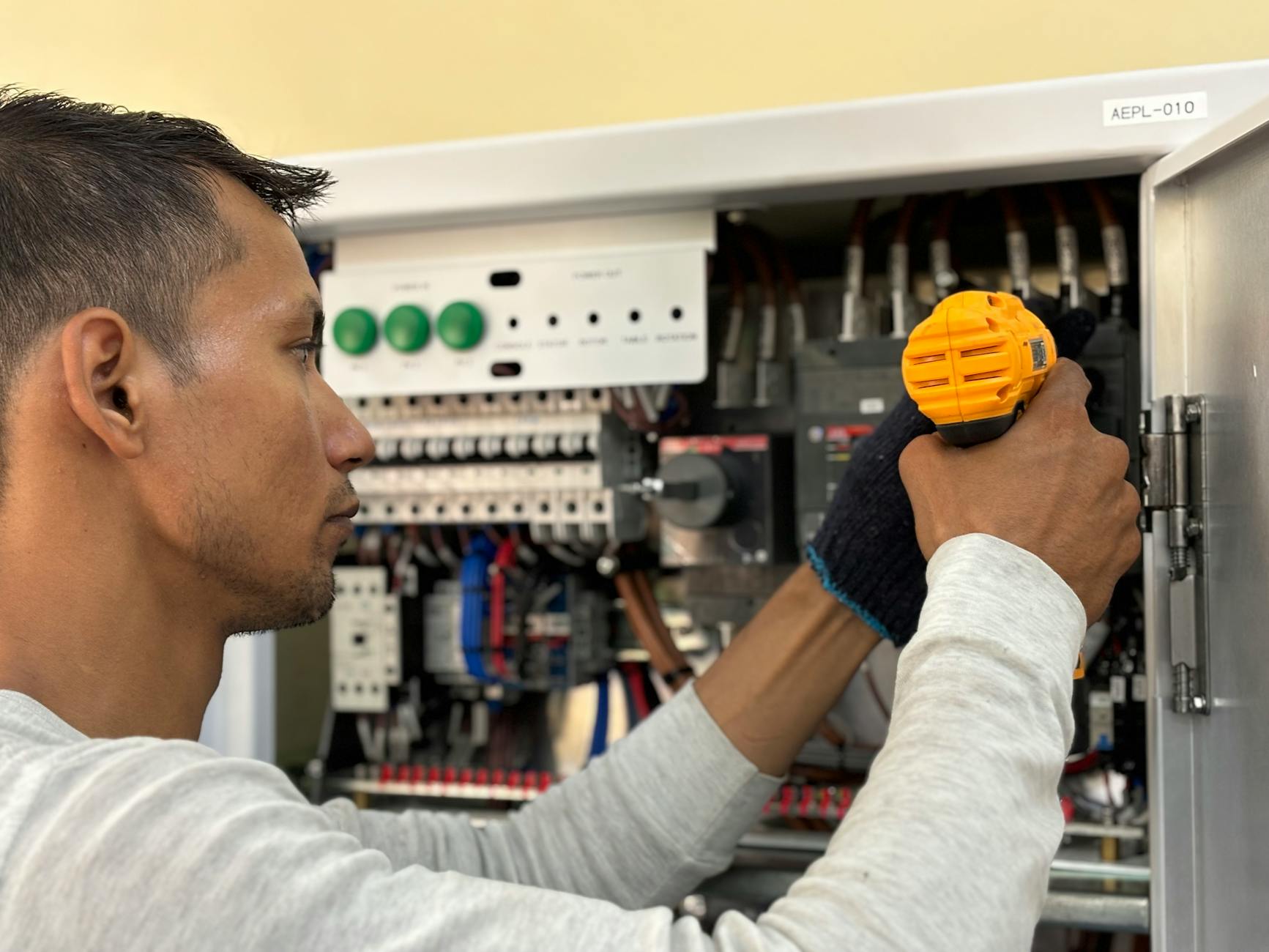
Most homeowners try to track down an electrical problem — a flickering light, a dead outlet, a switch that seems off — using nothing but their eyes and a finger on the breaker. That’s slow and genuinely risky. The best voltage testers for electricians and homeowners exist for exactly this situation: to confirm whether power is present before you touch anything, and to give you reliable diagnostic information you can act on.
A $20 tester can prevent a miswired outlet repair that costs $150 from an electrician. It can also prevent a serious injury. These are not high-stakes purchases — but choosing the wrong type of tool, or skipping it entirely, has real consequences.
Before you start shopping, the right question isn’t which tester to buy. It’s which type of tool matches what you’re actually trying to do. That answer changes based on your situation, your comfort level, and how deep you need to go.
Disclosure: This article contains affiliate links. If you purchase through these links, we may earn a small commission at no extra cost to you. As an Amazon Associate, we earn from qualifying purchases.
Voltage Tester vs. Multimeter: Which One Do You Actually Need?
This is the core decision, and it’s simpler than most product guides make it sound.
Get a non-contact voltage tester if:
- You want to confirm a circuit is dead before touching anything
- You’re checking whether voltage is reaching a switch or outlet
- You’re diagnosing a flickering light at a fixture or switch
- You want the fastest, safest way to verify power presence without probe contact
Get a multimeter if:
- You need to know the actual voltage level at an outlet — not just live or dead
- You’re testing a dryer heating element or appliance component
- You want to run continuity tests on switches, wiring, or fixtures
- You’re checking for voltage drop on a suspect circuit
The common buying mistake: Many homeowners buy a multimeter thinking it’s the more capable tool — and it is — but they find it harder to use in a cramped outlet box or behind a switch plate. Getting probe placement right in a small space, near live wires, is where errors happen. An NCV tester removes that risk entirely for the most common task: confirming power is off before you work.
Honest assessment: If you’re diagnosing flickering lights for the first time, a non-contact voltage tester and a plug-in outlet tester will handle the job. You don’t need a multimeter yet.
Quick Answer: Which Tool for Which Job
| Your situation | What to buy |
|---|---|
| Diagnosing flickering lights, replacing a switch or outlet | NCV tester ($15–$25) + outlet tester ($10–$15) |
| Also work on 240V appliance circuits, want adjustable sensitivity | Dual-range NCV tester ($30–$50) |
| Testing appliances, checking voltage levels, running continuity tests | Add a multimeter ($30–$60) to your NCV tester |
| Haven’t opened an outlet or switch plate and aren’t planning to | Neither — call an electrician first |
Why the Right Voltage Tester Makes Electrical Diagnosis Faster and Safer
Diagnosing electrical problems without a tester is guesswork. Flipping a breaker does not guarantee a wire is dead. A switch in the “off” position does not mean there’s no voltage at the fixture. These assumptions cause injuries.
There are two primary categories of electrical diagnostic tools for homeowners:
- Non-contact voltage testers (NCV testers): Pen-style tools that detect voltage through wire insulation without touching bare conductors. They tell you one thing: live or dead.
- Multimeters: Multi-function meters that measure actual voltage levels, current, resistance, and continuity. More powerful, but more complex to use safely in tight spaces.
Who should not buy either tool right now: If you’re not planning to open an outlet cover, remove a switch plate, or work anywhere near exposed wiring, you don’t need a voltage tester yet. Call an electrician and skip this purchase entirely.
For everyone else — let’s figure out which of the best voltage testers for electricians and homeowners fits your situation.
What the Best Voltage Testers Get Right — Features That Matter for Home Electrical Work
When looking at the best voltage testers for electricians and homeowners, a few features separate reliable tools from ones that can fail you silently. Don’t let a low price point make this feel like a low-stakes decision. A tester that fails silently — or false-reads — is worse than no tester at all.
Voltage Detection Range
Residential circuits run at 120V or 240V. 240V covers dryers, ranges, and HVAC equipment. Confirm your tester covers both ranges. Some budget testers cap at 120V AC, which leaves you unprotected on higher-voltage circuits.
Audible and Visual Alert
An audible beep is not a convenience feature — it’s critical. When working in an attic, crawl space, or behind a ceiling fixture in bad light, you need to hear the alert, not watch for it. Any tester worth buying has both.
Sensitivity and False Triggering
Some NCV testers detect energized cables through drywall. That sounds useful, but it leads to false positives near live wiring in adjacent circuits. Look for adjustable sensitivity. Or check user feedback for models known to hold reliable thresholds without false triggering.
CAT Rating
CAT ratings indicate where a tester can be safely used in an electrical system. For homeowners working on outlets, switches, and fixtures, CAT III 300V is the appropriate minimum. CAT IV is required for main panel or utility service entrance work — that’s not homeowner territory, but it’s reassuring if a tester carries it.
For a broader look at how voltage tester safety applies to whole-home diagnostic work, how to use a non-contact voltage tester safely covers this in the context of building out a home diagnostic toolkit.
Battery Indicator and Self-Test
Cheap testers die quietly. A model without a low-battery warning can give a false “no voltage” reading. That creates dangerous false confidence. A self-test function confirms the tester is working before you rely on it. It’s worth a few extra dollars.
Build Quality and Grip
A tester dropped into a live breaker panel is a serious hazard. Rubberized grip and a pocket clip prevent that. They’re not luxury features.
Best Voltage Testers for Electricians and Homeowners: Non-Contact Picks
Group 1 — Everyday Homeowner Use (Switches, Outlets, and Fixtures)
Who this is for: Someone diagnosing a flickering light, checking an outlet before replacing it, or confirming a switch is dead before pulling it. This is the most common homeowner use case.
What to look for: Reliable 120V detection, clear audio alert, compact enough to fit into an outlet box, and a battery indicator or self-test.
Representative pick: A reliable non-contact voltage tester like the Klein NCVT-1P is the right tool for this job. Straightforward detection, audible alert, compact pen form. This is the tool that should be in every homeowner’s kit before any electrical work starts.
Budget: $15–$25. Don’t spend more for features you won’t use at this level.
Group 2 — Homeowners Who Work on Their Own Electrical More Regularly
Who this is for: Someone who tests 240V appliance circuits, inspects the panel to identify which breaker controls a circuit, or wants adjustable sensitivity to reduce false triggering.
What to look for: Dual-range detection (typically 12–1000V AC), adjustable sensitivity, CAT IV rating, robust build.
Representative pick: A dual-range tester suited for 240V circuit work — tools in the Fluke 1AC-A1-II class are the standard here. Still a single-function tool (live or dead only), but covers the full range of residential voltages reliably.
Budget: $30–$50 for a quality dual-range model.
Pair It with an Outlet Tester
An outlet tester is one of the most underrated tools a homeowner can own. Plug it directly into a receptacle, and indicator lights immediately show wiring faults: open ground, reversed polarity, open hot, open neutral. No probes. No technique required. A plug-in outlet tester to check wiring faults quickly costs under $15 and catches fault types that even an NCV tester can’t show you. It belongs in the kit alongside your voltage tester.
Best Multimeters for Homeowners: Deeper Electrical Troubleshooting
Who Actually Needs a Multimeter
- You’re diagnosing an appliance and need to test a component — for example, testing a dryer heating element or thermal fuse
- You want to confirm the actual voltage at an outlet reads within range (115–125V under load)
- You’re testing a thermostat, fixture, or switch for continuity
- You’ve used an NCV tester and outlet tester and still haven’t found the fault
Who does not need a multimeter right now: Anyone diagnosing flickering lights for the first time. Start with the NCV tester and outlet tester above. Come back to this if those tools don’t resolve it.
Features That Matter for Homeowner Use
- Auto-ranging: Selects the voltage range automatically. Simpler and safer than manual selection for occasional users.
- Continuity mode with audible beep: Essential for testing fuses, switches, and wiring runs without watching the screen.
- 600V AC/DC range minimum: Covers all standard residential circuits.
- Fused inputs: Protects the meter and you from transient surges. This is not optional for safe home use.
- CAT III minimum: Required for outlet and appliance-level work.
Representative pick: An auto-ranging multimeter with continuity mode — the Klein MM400 or Fluke 107 class hits the right balance of reliability, safety features, and ease of use for homeowners.
Budget: $30–$60. Below $20 typically means no fuse protection and inconsistent readings. Above $60 adds features that only matter for professional diagnostic work.
The trade-off no one mentions: A multimeter requires both probes to be placed correctly at the same time. In a tight switch box, that’s harder than it sounds. It’s the most common reason homeowners get incorrect readings — or create a short. Use your NCV tester to confirm the circuit is dead first, every single time.
If wiring work follows your diagnosis, keep quality electrical tape on hand for insulating exposed connections. It’s a small detail that matters when you’re reassembling a switch or fixture. The How to Replace a Standard Single-Pole Light Switch guide covers that full process — but the first step there, as it is everywhere in home electrical work, is verifying the circuit is dead with a tester before you touch anything.
What a Voltage Tester Cannot Tell You — and When to Call an Electrician
An NCV tester is a safety gate, not a complete diagnostic system. It confirms power is present. It does not tell you why a light is flickering.
What these tools cannot detect:
- Intermittent loose connections: A wire may read live even when a loose connection is the fault. It simply makes contact long enough to register. If you suspect this is the cause, read about diagnosing a loose wire causing flickering at a switch — that article walks through the diagnostic process step by step.
- Overloaded circuits: These flicker under load but test fine when unloaded.
- Neutral wire problems: These can cause flickering without any fault at the hot conductor.
- High-resistance faults: A multimeter can catch voltage drop (look for readings significantly below 115V at an outlet under load), but intermittent faults may not appear during the test window.
When to stop and call a licensed electrician:
- Flickering affects multiple circuits or the whole house at once
- Any burning smell, discoloration, or heat at an outlet, switch, or panel
- Breakers tripping under normal load
- Wiring in homes built before 1985 that may include aluminum branch circuit wiring — this requires specialist evaluation
- Turning off the breaker doesn’t resolve your uncertainty about whether a wire is still live
Frequently Asked Questions
Do I need a multimeter or a voltage tester for flickering lights?
Start with a non-contact voltage tester. It confirms whether power is reaching a switch, outlet, or fixture — which is the first thing you need to know. A multimeter is only necessary if you need to measure the actual voltage level or run a continuity test. Most flickering light diagnoses don’t require one.
Can a non-contact voltage tester detect a loose wire?
Not reliably. A loose wire may still make enough contact to read as live. NCV testers detect voltage presence — they can’t tell you whether a connection is secure. If you suspect a loose wire, see the diagnostic steps for diagnosing a loose wire causing flickering at a switch.
What does it mean if my voltage tester beeps at a switch I turned off?
It means voltage is still present at that location. This can happen if you turned off the wrong breaker. It can also happen if the switch controls the neutral leg instead of the hot — which is a wiring error. Do not proceed until you identify the source of the voltage.
Is a $15 voltage tester as safe as a $60 one?
It can be, if it carries the right CAT rating and has a working battery indicator. The risk with cheap testers isn’t the price — it’s that some lack a low-battery warning or self-test function. A tester that fails silently is dangerous. Check for CAT III rating and battery indication regardless of price.
What CAT rating do I need for household outlet work?
CAT III 300V is the minimum for working on outlets, switches, and fixtures. CAT IV is for work at the main panel or service entrance. Most homeowners won’t need CAT IV, but it doesn’t hurt if a tester carries it.
Can I use a voltage tester inside my breaker panel?
You can use a non-contact voltage tester to identify which breaker controls a circuit — but do not reach into the panel beyond that. The main lugs at the top of the panel remain live even with the main breaker off. That’s utility-level voltage. Panel work beyond breaker identification is not homeowner territory.
Why does my voltage tester give false readings near walls?
NCV testers can detect energized cables through drywall. If there’s a live wire running behind the surface you’re testing near, the tester may beep without a direct circuit in front of it. This is a sensitivity issue. Look for a model with adjustable sensitivity, or step further from the wall and retest.
What’s the difference between a pen-style voltage tester and a plug-in outlet tester?
A pen-style NCV tester detects voltage by proximity — you hold it near a wire, outlet slot, or switch terminal. A plug-in outlet tester inserts directly into a receptacle and reads the wiring configuration via indicator lights. They test different things. The outlet tester checks for wiring faults like open ground or reversed polarity. The NCV tester confirms voltage presence at any point in the circuit. Both are useful. Neither replaces the other.
The Complete Summary: Which Voltage Tester Should You Buy?
The best voltage testers for electricians and homeowners share the same core qualities: accurate detection, reliable alerts, appropriate CAT rating, and a battery indicator so they never fail silently. The difference is in range and features.
| If you are… | Buy this |
|---|---|
| A homeowner who wants one safety tool for outlet and switch work | NCV tester ($15–$25) + outlet tester ($10–$15) |
| Someone who also works on 240V appliance circuits or wants adjustable sensitivity | Dual-range NCV tester ($30–$50) |
| Someone diagnosing appliance failures, testing continuity, or checking voltage levels | Add an auto-ranging multimeter ($30–$60) to your NCV tester |
| Someone who hasn’t opened an outlet or switch plate before and isn’t planning to | Neither — call an electrician first |
Start with the non-contact tester and the outlet tester. They handle the most common homeowner electrical problems for under $35 combined. Add the multimeter if and when the diagnosis requires it. And before you touch any wiring — always verify the circuit is dead, even if you’re certain you turned off the right breaker.

Home Electrical & Appliance Troubleshooting