If you wait until something breaks to think about HVAC maintenance tools for homeowners, you are already behind. Homeowners who keep a basic kit on hand and do routine maintenance — filter changes, coil cleaning, condensate flushes — spend far less on emergency service calls and get more years out of their equipment. This checklist covers every tool worth having before a problem shows up. Nothing here requires a technician’s license. Every item is homeowner-grade, available at any hardware store, and useful across more than one task.
Disclosure: This article contains affiliate links. If you purchase through these links, we may earn a small commission at no extra cost to you. As an Amazon Associate, we earn from qualifying purchases.
Why the Right Home HVAC Tools Save You Time and Money
Technician callout fees start at $80–$150 before any diagnosis or repair happens. Many of the most common HVAC issues — clogged condensate drains, dirty coils, blocked filters — require no training to fix, just the right tool. Owning a basic homeowner HVAC tool kit also helps you describe a problem accurately when you do call a tech. That shortens the service call and reduces guesswork charges. Think of this kit the way you think of a first-aid kit: you buy it before you need it.
Essential HVAC Maintenance Tools for Homeowners
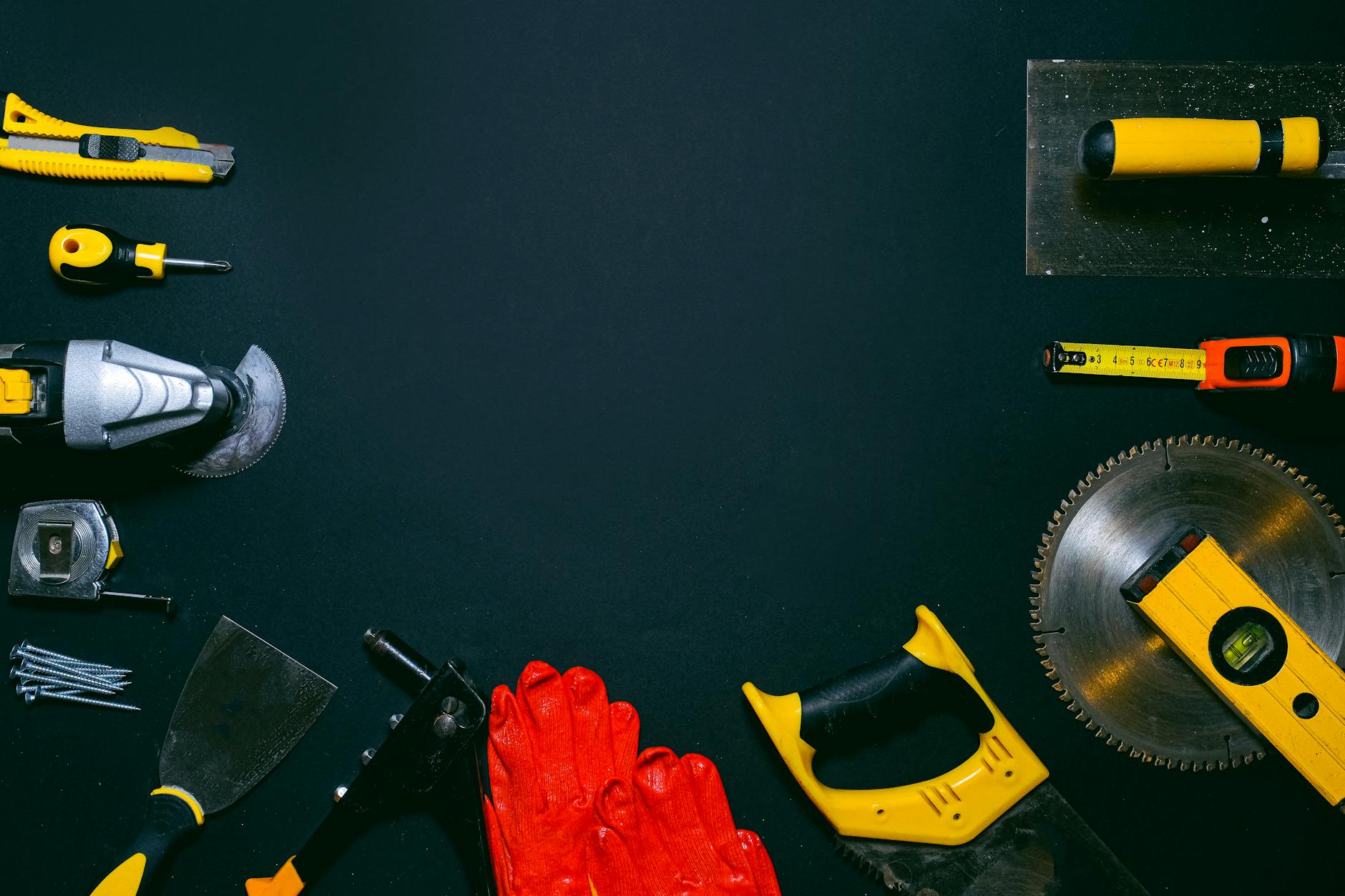
This is your core basic HVAC maintenance kit. Work through it section by section.
Basic Hand Tools
Good HVAC maintenance starts with tools you may already own. The difference is having the right sizes ready before you need them.
- [ ] Flathead and Phillips screwdrivers (multiple sizes) — for removing access panels on furnaces, air handlers, and window units
- ] Nut driver set (¼” and 5/16″) — most HVAC sheet metal panels use hex screws; a nut driver is faster than a screwdriver and less likely to strip the head. If you are building out your toolkit, a quality [drill and driver set handles both driving screws and drilling pilot holes and will serve you well across many home maintenance tasks beyond HVAC.
- [ ] Needle-nose pliers — for reaching into tight spaces inside air handler cabinets where your fingers will not fit
- [ ] Work gloves — sheet metal edges on HVAC units are sharp; do not skip these
Measurement and Inspection
These tools cost very little. They prevent expensive mistakes and let you check your system without guessing.
- [ ] Tape measure — confirm your filter dimensions before every purchase; write the size on a piece of tape stuck to the unit itself
- [ ] Flashlight or headlamp — attic air handlers, crawl space ducts, and furnace interiors are dark; a headlamp keeps your hands free
- [ ] Inspection mirror — for viewing coils, drain pans, and duct connections you cannot see from a straight-on angle
Filter and Coil Maintenance
Filters and coils are the two parts of your system that need the most regular attention. Having the right supplies on hand means you will not skip a scheduled task.
- [ ] Replacement air filters (keep 2–3 on hand in the correct size) — having filters in the closet eliminates the habit of running the system a few extra weeks past the change date
- [ ] No-rinse evaporator coil cleaner spray — applied directly to indoor evaporator coils once a year. It foams, loosens buildup, and drains away without rinsing. This is one of the most useful items in the kit and safe for homeowner use.
- [ ] Soft-bristle brush — for brushing loose debris off condenser fins before applying cleaner; a fin comb is also worth having for straightening bent fins on the outdoor unit
Condensate System Maintenance
The condensate drain carries moisture away from your indoor unit. It is one of the most common sources of water damage and system shutdowns.
- [ ] Wet/dry shop vac — the single most useful tool in this entire list for most homeowners; attach it to the drain line outlet and clear a clog in minutes
- [ ] Condensate drain tablets (algae tabs) — drop one into the drain pan quarterly to prevent algae and mold buildup before it causes a blockage
- [ ] Distilled white vinegar — pour a cup into the condensate cleanout port monthly; it breaks down early algae growth without damaging the line
HVAC Diagnostic Tools Every Homeowner Should Have
This section covers the HVAC diagnostic tools a homeowner genuinely needs. This is not a contractor’s full kit. These are the items that help you spot problems before they get expensive.
- [ ] Infrared thermometer (non-contact) — point it at supply and return vents to check temperature difference. A working central AC system should show a 15–20°F difference between return air entering and supply air leaving. A smaller gap can signal a refrigerant or airflow issue worth looking into.
- [ ] Digital multimeter — tests voltage, continuity, and resistance. You can use it to check whether a capacitor is within spec. It also confirms power at disconnect blocks and tests thermostat wiring. If you have not used one before, get comfortable with basic functions before probing live circuits.
- ] [Non-contact voltage tester — safer than a multimeter for a quick power check at disconnect boxes and air handler wiring. Hold it near a wire or terminal and it lights up or beeps if voltage is present — no contact required. This is a genuine safety tool and one of the best low-cost items on this list. It is worth keeping in every home toolbox. It costs around $15–$25 at any hardware store. The same tester is useful beyond HVAC — see how to diagnose a loose wire causing flickering for an example of how it applies to electrical work around the house.
- [ ] Manometer or incline gauge (optional, advanced) — measures static pressure inside ductwork. Homeowner-grade digital manometers exist, but this is only worth buying if you are chasing a chronic whole-house airflow problem. Most homeowners will never need it.
Airflow and Duct Tools for Your Homeowner HVAC Kit
- [ ] Anemometer (airflow meter) — a small digital anemometer placed over a supply register shows actual airflow in feet per minute. Measure each register once and log it. If a register drops in a later season, you have a starting point for diagnosis.
- [ ] UL-listed HVAC foil tape — for sealing small gaps at duct joints and around air handler cabinets. This is not the same as generic silver duct tape. Standard duct tape is not rated for HVAC temperature cycles and will peel off within a season. Look specifically for UL 181-rated foil tape.
- [ ] Mastic sealant and brush (optional) — better than tape for permanently sealing accessible duct joints in attics or basements. It takes more time and cleanup but will not fail. Worth the effort if you have visible gaps on a long duct run.
- [ ] Register/grille key or flathead screwdriver — for removing and adjusting floor and wall registers during cleaning or seasonal balancing
- [ ] Canned or compressed air — for clearing dust from sensor ports on smart thermostats, control board connections, and accessible duct openings
When Your HVAC Maintenance Tools Have Limits: Knowing When to Call a Tech
This checklist covers maintenance. The items below are not maintenance — they are professional work.
Hard stops — always call a licensed HVAC technician:
- [ ] Refrigerant handling of any kind — EPA Section 608 certification is required by law; it is illegal to handle refrigerant without it
- [ ] Gas line connections or burner work on furnaces and boilers
- [ ] Disconnect boxes or wiring with visible burn marks, melted insulation, or signs of arcing
- [ ] Any repair that requires evacuating or pressurizing refrigerant lines
- [ ] Carbon monoxide (CO) alarm activation — evacuate first, call 911, call a technician second
A useful rule: if the kit addresses it, it is maintenance. If it requires recovered refrigerant or a gas shutoff, it is a technician’s job. The goal of this kit is to keep a healthy system healthy — not to repair one that has already failed.
How to Store and Organise Your Home HVAC Maintenance Kit
Keep it simple or you will not use it.
- [ ] Use a single labeled bin, bag, or toolbox — everything in one place
- [ ] Store it near your furnace or air handler if space allows
- [ ] Write your filter size on a piece of tape and stick it inside the lid
- [ ] Keep a log card — index card or phone note — with your last filter change date, last coil cleaning date, and last condensate flush date
- [ ] Restock consumables (filters, drain tabs, coil cleaner) at the start of cooling season and again at the start of heating season
What to Do Once Your HVAC Maintenance Tool Kit Is Ready
Do not let it sit in a closet. Run through this sequence now:
- Walk your HVAC system with the kit — confirm you can open access panels and locate the condensate drain cleanout port
- Check your current filter — if it is past 90 days or visually clogged, replace it today
- Flush your condensate drain with vinegar now, not when it backs up and causes a water leak
- Set a calendar reminder for your next filter change and for seasonal maintenance before summer and before winter
- If you find anything outside the kit’s scope — unusual sounds, error codes on the thermostat, or ice on the refrigerant lines — start diagnosing before you call. If your furnace is producing an unusual squeal, reviewing furnace making a squealing noise: blower belt and bearing diagnosis is a good example of how the tools in this kit help you identify the source before a technician arrives. If you have a window AC making loud noise, the same principle applies. The same airflow logic applies to other appliances — if your dryer stopped producing heat, restricted airflow is often the first place to check there too.
A small, well-organized set of HVAC maintenance tools for homeowners is one of the better investments you can make in your home. It costs less than a single service call. It gives you the ability to catch problems early, handle the simple tasks yourself, and make smarter decisions about when to call a professional.
Frequently Asked Questions About HVAC Maintenance Tools for Homeowners
How often should I change my HVAC filter?
Every 60–90 days for standard 1-inch filters is the general rule. If you have pets, allergies, or a dusty environment, check it every 30 days. The simplest habit is to keep 2–3 filters on hand so you change it when you notice it, not when you get around to buying one.
Can I clean my own evaporator coils?
Yes. No-rinse evaporator coil cleaner spray is designed for homeowner use. Turn the system off, open the air handler access panel, apply the foam directly to the coil, and let it drain away. You do not need to rinse it. Do this once a year, ideally before cooling season starts.
What is the correct way to flush a condensate drain line?
Pour one cup of distilled white vinegar into the condensate cleanout port monthly. This breaks down early algae growth before it becomes a blockage. If the line is already clogged, use a wet/dry shop vac at the drain outlet to clear it first, then return to the monthly vinegar routine.
Do I need a multimeter or is a non-contact voltage tester enough for a homeowner?
For most homeowners, a non-contact voltage tester is enough. It tells you whether power is present at a terminal or wire without any contact. A multimeter gives you more information — actual voltage, continuity, resistance — but requires more comfort with electrical work to use safely. Start with the non-contact tester and add a multimeter when you are ready.
What temperature difference should I expect between supply and return air?
A working central AC system should show a 15–20°F difference between the air entering the return vent and the air leaving the supply vent. Use an infrared thermometer to check this. A smaller gap — say, 8–10°F — can point to a refrigerant charge issue or a dirty evaporator coil worth investigating.
Is duct tape safe to use on HVAC ducts?
No. Standard duct tape — including the common silver fabric-backed kind — is not rated for HVAC temperature cycles. It dries out and peels away within a season. Use UL 181-rated foil tape for duct sealing. It is designed for HVAC applications and will hold up over time.
How do I know if my condensate drain is clogged before it causes a leak?
Check the drain pan under your indoor unit when you change the filter. If you see standing water, the drain is slow or blocked. Some air handlers have a float switch that shuts the system off when the pan fills — if your system stops for no obvious reason in summer, this is worth checking before calling a technician.

DIY Home Repair & Plumbing