A peeling paint moisture problem behind the wall is one of the most commonly missed causes of repeat paint failure. If water is involved, fresh paint over the same spot will fail again — usually within weeks. This article walks you through how to read the signs, confirm the cause, trace the water source, and decide what to do next.
Disclosure: This article contains affiliate links. If you purchase through these links, we may earn a small commission at no extra cost to you. As an Amazon Associate, we earn from qualifying purchases.
Why a Moisture Problem Behind the Wall Causes Paint to Peel
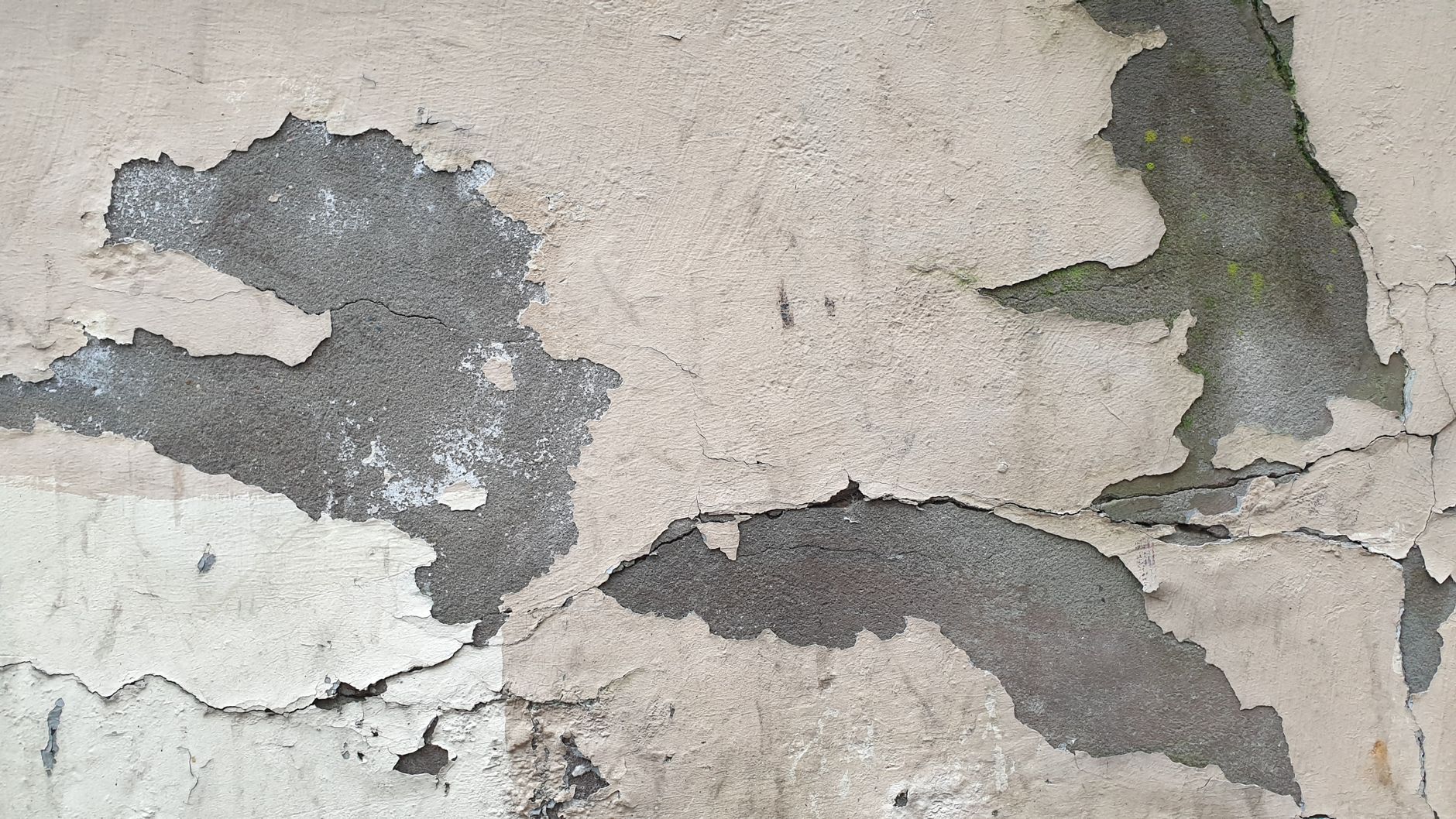
Water vapor or liquid moisture moves through drywall and plaster toward the surface. As it travels, it breaks the bond between the paint film and the wall material. The result is bubbling, blistering, or flaking paint.
There are two types of moisture involved in this kind of damage:
- Surface moisture — condensation forming on the face of the wall, usually driven by high indoor humidity. This is common in bathrooms and poorly ventilated rooms.
- Behind-wall moisture — a leak or water intrusion inside the wall cavity. This is a more serious source. It often involves pipe failures, exterior infiltration, or slow structural damage you cannot see.
Both cause paint to peel. But behind-wall moisture follows specific patterns that surface condensation does not. Knowing the difference is what this article is built around.
Peeling Paint Patterns That Point to a Moisture Problem Behind the Wall
This is where diagnosis starts. Match what you see on your wall to one of these patterns.
Pattern 1 — Bubbles or Blisters Under the Paint Film
If the paint has raised, rounded blisters that feel slightly soft or move when you press them, moisture is actively pushing against the paint layer from underneath. This is one of the clearest signs of a peeling paint moisture problem behind the wall.
Blisters are common near pipe runs, along exterior walls, and close to window frames.
Pattern 2 — Peeling in a Defined Vertical or Horizontal Band
A stripe of peeling paint that follows a consistent line — vertical like a pipe run, or horizontal like a window sill or floor edge — usually traces a water travel path. Water follows framing members and pipe chases as it moves through a wall cavity.
Random peeling spread across an entire wall is more likely a paint adhesion problem: poor prep, no interior stain-blocking primer, or incompatible products. Localized band-shaped peeling points to a specific leak source.
Pattern 3 — Staining Beneath or Around the Peeling Area
Yellow, brown, or rust-colored marks under or alongside the peel are dried mineral deposits left behind by water. This is one of the clearest peeling paint signs of water damage you will find.
If the staining is there but the drywall feels firm, the leak may have already stopped. That does not mean you can skip finding the source. It means you have a window to investigate before the next event.
Pattern 4 — Soft, Spongy, or Crumbling Drywall at the Peel Site
Press gently around the peeling area. If the wall gives, feels spongy, or the paper face tears without much pressure, the drywall core has been compromised. This is an escalation signal. Do not proceed to any repair work until you understand what is behind it.
What Does NOT Usually Point to a Moisture Problem
These patterns are commonly misread as moisture damage — but usually are not:
- Peeling limited to corners or edges — typically tape failure or poor adhesion at seams
- Uniform flaking across an entire room — usually old paint incompatibility or a skipped primer coat
- Peeling only on paint-over-paint surfaces — often a sheen mismatch between coats
How to Confirm Paint Peeling Off a Wall Is a Moisture Problem — Not Just Bad Paint
Once you have identified the pattern, run through these steps before drawing any conclusions.
Step 1 — Press and probe the surface
Press firmly but gently across the peeling area and six to twelve inches around it. A firm wall with peeling paint and no staining is more consistent with a paint adhesion problem. A soft or yielding wall almost always points to moisture damage behind the drywall.
Step 2 — Check for smell
Put your face close to the wall — particularly in a closed or low-ventilated room. A musty or earthy odor is a strong indicator of mold growth inside the wall cavity. Take this seriously. It does not confirm mold by itself, but it changes how urgently you should act.
Step 3 — Use a moisture meter
This is the most reliable tool a homeowner can use for this kind of diagnosis. A pin-type moisture meter drives two small probes into the wall surface and measures moisture content. Non-contact (pinless) meters are also useful for initial scanning without making holes.
Take a reading at the center of the affected area. Then take a second reading on a dry section of the same wall for comparison. In drywall, readings above 17% moisture content suggest active or recent water exposure.
One important caveat: a dry reading does not rule out a past leak. If you see staining or feel soft spots, that evidence still stands even if the meter reads dry today.
Step 4 — Check the opposite side of the wall
Go to the adjacent room, closet, or hallway and look at the same wall location from the other side. Check for matching staining, soft spots, or bubbling paint. Water migrates further than the visible damage suggests. The back side of the wall often shows signs the front side has not yet revealed.
Step 5 — Mark and monitor
If the moisture source is not obvious and the drywall is still firm, use a pencil to trace the perimeter of the affected area and note the date. Check back in a week. If the affected zone has grown, moisture is still active. If it has stayed the same, the leak may have stopped — though you still need to find what caused it.
Where to Look for the Water Source Behind Peeling Paint
The location of the peeling on your wall is the most useful clue for tracing the source. Start here.
Exterior-Facing Walls
- Failed or missing waterproof silicone caulk around window frames — check after rain to see if the affected area feels damper
- Cracked window or door flashing that allows water to enter the wall behind the frame
- Damaged siding, deteriorated mortar in brick, or gaps at wall penetrations
A tube of exterior caulk and a drip-free caulk gun are the right tools if failed caulk around a window frame turns out to be the source. It is one of the most common and most fixable causes of moisture intrusion on exterior walls.
Interior Walls Near a Bathroom or Kitchen
- A slow leak on a supply line or drain inside the wall
- Failing caulk around a tub surround or shower base, allowing water to enter the wall cavity over time
- Check under the sink or behind the toilet if the wall is shared with these fixtures
Walls Below an Upstairs Bathroom or Laundry Room
A slow drain leak above can travel down a stud bay and surface several feet lower than where the leak actually is. If the peeling appears to descend from a ceiling line, look upstairs first.
Basement or Below-Grade Walls
Hydrostatic pressure is groundwater pushing against the foundation from outside. It is a common driver of paint bubbling on basement walls. Watch whether the peeling worsens after heavy rain or spring snowmelt. That timing correlation is a reliable indicator of moisture damage behind drywall.
Walls Adjacent to Exterior Plumbing Chases
In cold climates, supply lines running inside exterior walls can cause condensation. A freeze-crack can also leak slowly over time. If you are in a colder region and the affected wall is on the north or wind-exposed side of the house, add this to your checklist.
When a Peeling Paint Moisture Problem Behind the Wall Needs a Professional
Some situations require a licensed professional. Be clear about which ones.
Stop and call a professional when:
- The drywall is soft, crumbling, bulging, or sagging
- You find or suspect mold — visible black, green, or fuzzy growth, or a persistent musty odor that does not clear when you ventilate the space
- The water source is inside the wall and requires opening the wall to access a pipe
- The affected area of soft or stained drywall spans more than a few square feet
- The wall is on an exterior foundation and moisture keeps returning after drying out
The most common mistake in this situation: painting over a wall that still has active moisture. The new paint fails in the same spot, usually within weeks. Painting over hidden mold does not eliminate it. It delays discovery and makes the eventual remediation more expensive.
What to Do Before Repainting Over a Former Moisture Problem
This section only applies after you have confirmed the moisture source has been fully repaired. If the source is not fixed, do not start here.
Wait and verify. Even after a leak is repaired, the wall needs time to dry. Plan for one to three weeks, depending on how saturated the drywall became and how well the space is ventilated. Use a moisture meter to confirm the wall reads below 12–15% before you touch the surface. Do not guess on this.
Address the staining first. If the drywall is sound but shows water staining, a standard latex primer will not seal it. The stain will bleed through the finish coat. Use a shellac-based stain-blocking primer — products like Zinsser BIN are purpose-built for this and more reliable than water-based options for heavy water staining.
Replace compromised drywall. If the drywall is soft, crumbling, or delaminated, it needs to be cut out and replaced. Priming or painting over damaged drywall does not restore it.
Use mold-resistant paint for the finish coat. In any area that experienced moisture intrusion — especially rooms with limited ventilation — mold-resistant paint adds a reasonable layer of long-term protection. In high-humidity spaces like bathrooms and kitchens, Choosing the Right Paint Sheen for Bathrooms and Kitchens to Prevent Peeling is an important step that reduces the risk of repeat failures in these areas.
If your affected area includes or adjoins the ceiling, the causes and repair sequence for peeling paint on a wall or ceiling surface will differ and are worth reviewing separately.
Frequently Asked Questions
Can I paint over peeling paint if I’ve fixed the leak?
Not right away. Even after the source is repaired, the wall needs one to three weeks to dry fully. Use a moisture meter to confirm readings are below 12–15% before you do anything to the surface. Painting too soon traps residual moisture and the paint will fail again in the same spot.
How do I know if the moisture is still active or if the leak already stopped?
Mark the perimeter of the affected area with a pencil and check back in a week. If the zone has grown, moisture is still active. A dry moisture meter reading combined with no change in the affected area suggests the leak has stopped — but you still need to find and confirm the source.
What does moisture damage actually look like behind drywall?
Behind the surface, you may find dark staining on the paper face of the drywall, soft or crumbling gypsum core, visible mold growth on framing or insulation, or rusted metal components. A peeling paint moisture problem behind the wall is often the first visible sign before any of this becomes accessible.
How long should I wait after fixing a leak before repainting?
One to three weeks is a reasonable minimum for most wall repairs. Thicker or more saturated sections take longer. Always verify with a moisture meter rather than relying on time alone. The wall should read consistently below 12–15% moisture content before you prime or paint.
Is peeling paint always a sign of mold?
No. Paint peeling off a wall from moisture does not automatically mean mold is present. Mold requires sustained moisture over time. A short-term leak that dried quickly may leave staining and soft drywall without significant mold growth. A musty odor, visible dark growth, or a reading that stays elevated over weeks are the stronger indicators.
What’s the difference between paint peeling from humidity versus a wall leak?
Humidity-driven peeling tends to be spread across a larger surface area and is most common in bathrooms or rooms with poor ventilation. A wall leak produces more localized patterns: a defined band, blistering near a pipe run, or staining in a specific spot. How to tell if walls have moisture damage from a leak versus humidity comes down to pattern shape and location.
Can a moisture meter detect problems without cutting into the wall?
Yes — to a point. A pin-type moisture meter reads the moisture content at the surface and slightly below. A non-contact meter can scan deeper. Neither tool gives a complete picture of what is happening inside the wall cavity. If readings are elevated and the wall feels soft, cutting a small inspection hole is often the only way to see what is actually behind the drywall.

DIY Home Repair & Plumbing