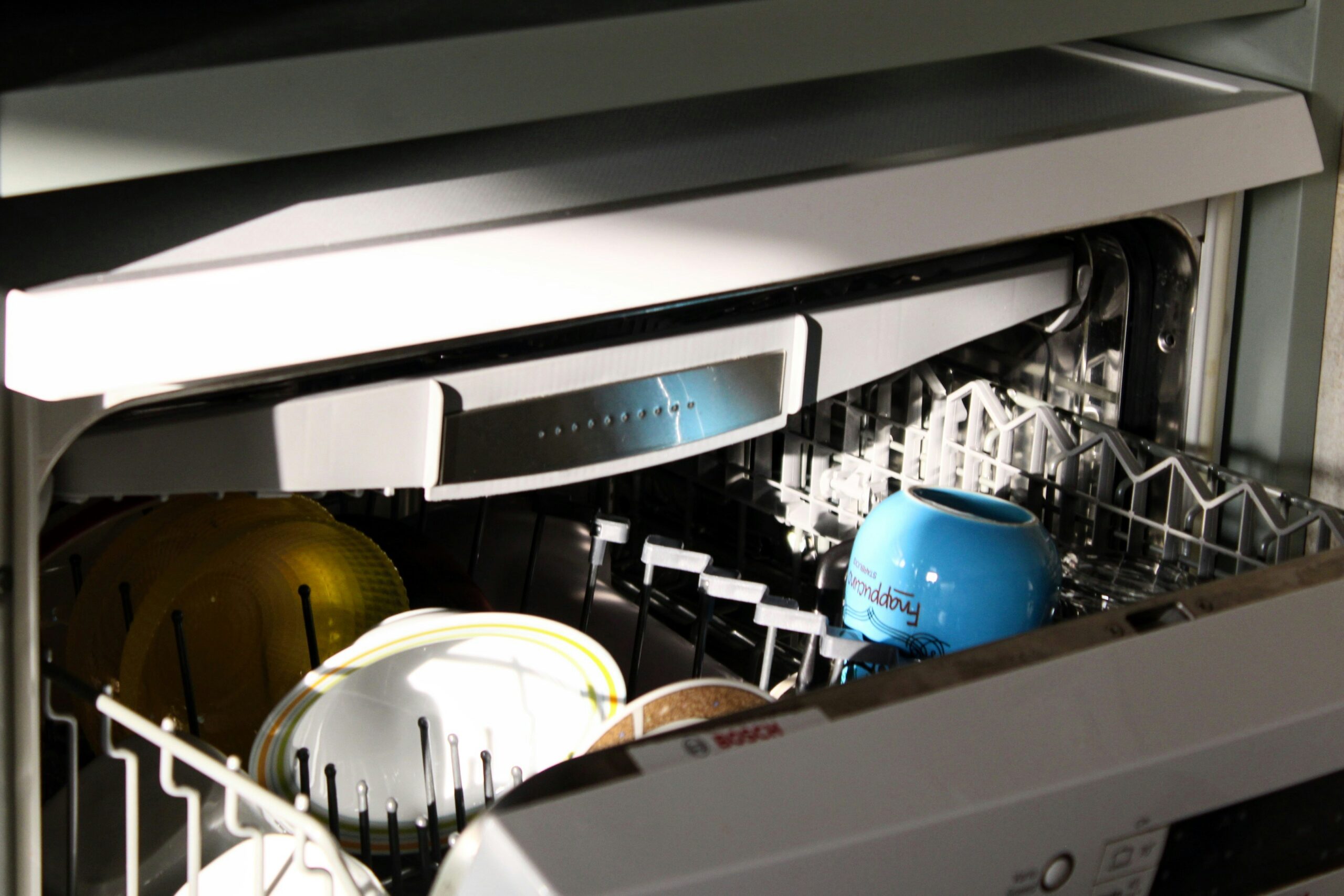
The cycle finished, you opened the door, and there’s an inch of standing water at the bottom. If you’re searching for dishwasher not draining causes and fixes, you’re in the right place. Most drainage failures come down to one of four specific causes. You can diagnose each one without special tools. Most are fixable in under 30 minutes. Work through them in order — the first two fix the majority of cases.
Disclosure: This article contains affiliate links. If you purchase through these links, we may earn a small commission at no extra cost to you. As an Amazon Associate, we earn from qualifying purchases.
Why Your Dishwasher Is Not Draining: The Four Causes in Order
Before pulling anything apart, know what you’re looking for. Dishwasher drainage problems almost always trace back to one of these four causes:
- Clogged filter — food debris and grease build up in the filter and block water from reaching the drain
- Blocked or kinked drain hose — the hose is pinched behind the unit or has debris clogged inside it
- Garbage disposal or air gap obstruction — the drain path is blocked at its connection point to the sink
- Failed drain pump — the pump that forces water out has stopped working
Start at the top. The filter is the most common cause by far, and it’s the easiest to check. Don’t jump to the pump before ruling out the simpler issues. That’s how homeowners end up replacing parts they didn’t need to. If you’re unsure whether your dishwasher symptoms point to a drainage issue or something else entirely, the Why Is This Happening in My House? Complete Home Problem Diagnosis Guide can help you narrow it down before you start.
Check the Filter First: The Most Common Fix for a Dishwasher Not Draining
The filter sits at the bottom of the dishwasher tub. It catches food particles during the wash cycle. When it’s clogged with debris, grease, or sediment, water can’t move toward the drain. This is the number one cause of dishwasher standing water. Many homeowners overlook it because they don’t realize their dishwasher has a manual filter.
How to confirm it’s the problem
- Remove the lower rack and set it aside
- Look at the bottom of the tub — you’ll see a cylindrical filter sitting inside a flat mesh filter plate
- Twist the cylindrical filter counterclockwise and lift both pieces out
- If either piece is coated in debris, grease, or gray sediment, this is almost certainly your cause
How to fix it
- Rinse both filter pieces under warm running water
- Use a soft brush — an old toothbrush works well — to scrub the mesh until it’s clear
- Do not use abrasive scrubbers or steel wool — they damage the fine mesh permanently
- Reinstall by lining up the filter and twisting clockwise to lock it
- Run a short rinse cycle and check whether the dishwasher drains completely
For heavy grease buildup, an appliance cleaner designed for dishwasher components cuts through residue faster than water alone. It helps restore full flow through the mesh.
If the filter was visibly dirty and the dishwasher now drains after cleaning, you’re done. If water is still standing, move to the hose.
How to Inspect and Clear a Dishwasher Drain Hose Clog
The drain hose runs from the dishwasher’s pump to the sink drain or garbage disposal. A dishwasher drain hose clog — or a kink from the hose being pushed back too far — will stop drainage even if the filter is perfectly clean.
How to confirm it’s the problem
- Unplug the dishwasher before doing anything else
- Pull the dishwasher forward enough to see behind and beneath it
- Inspect the hose along its entire visible length for tight bends, kinks, or pinch points
- If the hose looks straight, the blockage may be inside the hose itself
How to fix a kinked hose
- Reposition the hose so it runs in a smooth curve with no sharp angles
- Secure it with a zip tie or hose clamp so it doesn’t kink again when the dishwasher is pushed back into the cabinet
How to clear an internal clog
- Have old towels ready — water will spill when you disconnect the hose
- Loosen the hose clamps at both ends and pull the hose free
- Run water through it from a faucet to see if it flows freely
- If flow is restricted, use a drain snake to push the debris through and clear the blockage
- Reconnect the hose securely at both ends and confirm the clamps are tight before testing
Never work on the dishwasher while it’s plugged in. Unplug it at the wall before pulling it out or disconnecting any hoses.
Run a short cycle after reassembly. If the dishwasher drains cleanly, you’ve found the problem. If not, check the disposal or air gap next.
Garbage Disposal and Air Gap Issues That Stop Dishwashers from Draining
If your filter is clean and your hose is clear, the drain path may be blocked where it connects to the sink. This is one of the most commonly missed dishwasher drainage problems.
Unplug the dishwasher before inspecting any connections under the sink. This applies even if you’re only checking the disposal or air gap — the dishwasher drain hose is connected to the pump, and the unit should be de-energized before you work near those connections.
Garbage disposal
Most dishwashers drain directly into the garbage disposal. Two things go wrong here:
- Knockout plug left in place. If the disposal was recently installed or replaced, there’s a plastic knockout plug inside the drain inlet. It must be removed before connecting the dishwasher hose. If that plug is still there, the dishwasher cannot drain at all. This is an extremely common installation error.
- Full or clogged disposal. If the disposal is packed with food waste, it backs up into the dishwasher hose. Run the disposal until it clears completely, then test the dishwasher.
Air gap
An air gap is a small chrome or plastic fitting mounted on the countertop near the sink faucet. Not all setups have one. If yours does, it can clog with debris and restrict flow.
- Unscrew or pop off the decorative cap
- Remove the inner cap and clean out any debris inside the body
- Rinse the air gap components and reassemble
Check which setup you have — disposal, air gap, or both — and inspect whichever applies. Clearing either one usually restores drainage right away. Run a test cycle to confirm.
Dishwasher Not Draining After Filter and Hose Check? Inspect the Drain Pump
If you’ve cleaned the filter, cleared the hose, and confirmed the disposal and air gap are clear — and water is still standing in the tub — the drain pump is likely the cause.
The drain pump is a small motorized part. It forces water out of the dishwasher and through the drain hose. When it fails, nothing moves.
Signs pointing to a pump problem
- You hear a humming sound during the drain phase but water doesn’t move. The pump is running, but something is blocking the impeller.
- You hear no sound at all during the drain cycle. The pump has failed electrically or mechanically.
Check for debris in the impeller first
A piece of broken glass, a bone fragment, or another small hard object can jam the impeller. The pump itself may be fine.
- Disconnect power to the dishwasher
- Remove the filter and filter housing to access the pump opening at the bottom of the tub
- Use a flashlight to look for debris inside the pump opening
- Wear gloves — broken glass is a real hazard here
- Remove any visible debris carefully, then test the dishwasher
If the pump itself has failed
A failed pump needs to be replaced. Replacement pumps are model-specific. You’ll need your dishwasher’s model number — usually found on a label inside the door frame — to source the correct part. Parts typically run $30–$80 depending on the brand.
Replacing a drain pump is doable for a confident DIYer. It does involve partial disassembly of the dishwasher interior and working near the wiring harness. If you’re not comfortable with that level of repair, this is a reasonable point to call a technician. Having the right equipment on hand makes the job easier — see our guide to the Best Home Repair Tools and Supplies for Homeowners before you start.
When to Stop Diagnosing and Call a Repair Technician
Not every drainage problem is a DIY fix. Call a technician if:
- The drain pump has failed and you’re not comfortable with appliance disassembly
- The dishwasher is displaying error codes that won’t clear after you’ve resolved the drainage issue
- Water is leaking onto the floor — not just standing inside the tub
- The control panel is unresponsive and the cycle won’t start at all
On cost: A technician repair for a drain pump typically runs $150–$250 including parts and labor. If your dishwasher is more than 10 years old and the repair cost exceeds half the price of a comparable replacement unit, it’s worth doing the math on replacement instead.
For other appliance problems you can diagnose at home, see our guide to appliance troubleshooting — including a step-by-step on dryer faults that follow the same cause-first approach.
Prevent Dishwasher Drainage Problems Before They Start
Once you’ve resolved the current issue, these habits keep it from coming back:
- Clean the filter monthly. Most modern dishwashers have manual filters, not self-cleaning ones. Monthly cleaning prevents the buildup behind most dishwasher not draining causes and fixes.
- Scrape dishes before loading. You don’t need to pre-rinse, but remove solids. Food chunks, labels, and debris are what clog filters and pumps.
- Run the garbage disposal before starting a dishwasher cycle. Starting with a clear disposal means the drain path is open when the dishwasher needs it.
- Check the drain hose position any time you pull the dishwasher out for cleaning or other repairs. A hose that looks fine when the dishwasher is pulled forward can kink badly when pushed back into the cabinet.
Most dishwasher drainage problems come back to one thing: buildup that was preventable with routine filter cleaning. A few minutes once a month is a lot cheaper than a service call. If you ever need to go further with a dryer repair DIY or another appliance fix, the same step-by-step approach applies. For a broader look at what you can tackle on your own, see our guide to Appliance Problems Homeowners Can Fix Without a Technician.
Frequently Asked Questions
Why does my dishwasher have an inch of standing water after every cycle?
Standing water after every cycle points to the filter or drain hose as the most likely cause. A clogged filter is the single most common reason. Start there before checking anything else.
Can I run my dishwasher if it’s not draining fully?
No. Don’t run a dishwasher that isn’t draining completely. Repeated standing water accelerates mold growth inside the tub. It also puts extra strain on the drain pump and shortens its life.
How often should I clean my dishwasher filter?
Once a month is the standard recommendation for most households. If you run the dishwasher daily or cook meals with a lot of grease, clean the filter every two to three weeks.
Why did my dishwasher suddenly stop draining when it was fine before?
A sudden drainage failure usually points to a debris event. A piece of food, a broken glass fragment, or a paper label reached the filter or pump impeller and caused an immediate blockage. Remove the filter and inspect the pump opening for anything that doesn’t belong.
Does a dishwasher draining into a garbage disposal need an air gap?
It depends on local plumbing code. Some areas require an air gap. Others allow a high loop — where the drain hose is routed up to the underside of the countertop before dropping down to the disposal — as an alternative. Check your local code or ask a licensed plumber if you’re unsure what your installation requires.