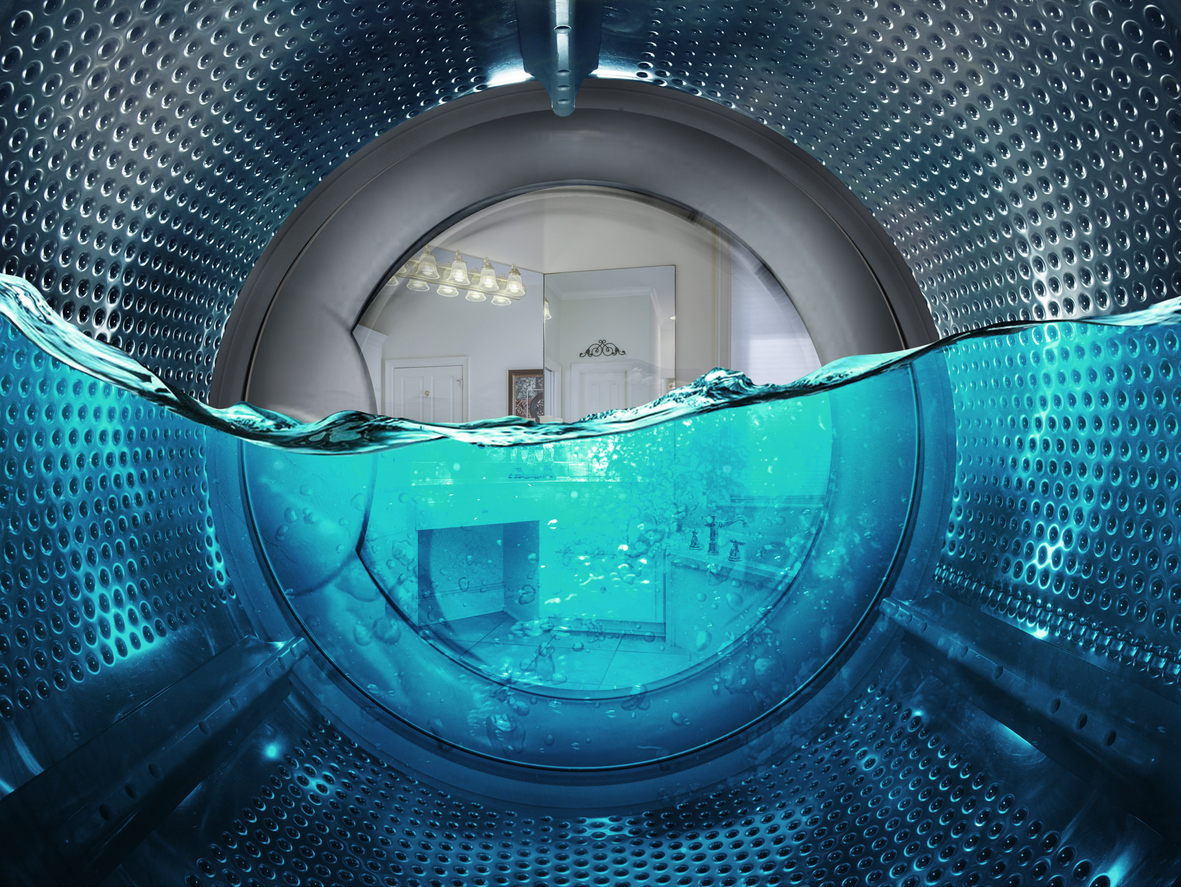
When a washing machine leaves water in the drum after a cycle ends, the cause is almost always one of five things — and most of them you can fix yourself in under an hour. This guide walks you through each cause in order from most to least likely, so you can diagnose the problem accurately before you do anything else. Start at the top and work your way down.
Disclosure: This article contains affiliate links. If you purchase through these links, we may earn a small commission at no extra cost to you. As an Amazon Associate, we earn from qualifying purchases.
Why Your Washing Machine Leaves Water in the Drum Instead of Draining
Here is what is supposed to happen: when the cycle ends, the drain pump activates and pulls water through the pump filter, out through the drain hose, and into a standpipe or utility sink. If your washing machine is leaving water in the drum, something interrupted that process at one of those points.
The five causes are:
- A clogged pump filter blocking water flow
- A kinked, clogged, or incorrectly positioned drain hose
- A failing or seized drain pump
- A faulty door latch or lid switch stopping the cycle before it drains
- A control board or software fault sending a bad drain command
Clogged Pump Filter: The Most Common Cause of a Washing Machine Leaving Water in the Drum
The pump filter — also called a drain filter or coin trap — sits between the drum and the drain pump. Its job is to catch lint, debris, and small objects before they reach the pump. Over time, it gets packed with enough material to restrict or fully block water flow, and the result is a washing machine that leaves water in the drum at the end of every cycle.
Where to find it: On front-load washers, it is almost always behind a small rectangular access panel near the base of the machine. Many top-load washers do not have an accessible pump filter — if yours is a top-loader and you cannot find a panel, skip ahead to the drain hose and pump sections.
How to confirm this is the cause: You will typically see slow or incomplete draining rather than zero draining. Many machines will also display a drain-related error code — common ones include F21 on Whirlpool models, 5E or 5C on Samsung, and OE on LG.
Step-by-step fix:
- Unplug the machine before touching anything near the base panel.
- Place a shallow pan or a stack of old towels directly under the access panel — there will be residual water.
- Open the panel and locate the filter cap.
- Turn the cap slowly counterclockwise. Let water drain gradually into your pan rather than unscrewing it all at once.
- Once the water has drained, remove the filter completely.
- Clear out all debris — coins, hair, lint, small fabric pieces.
- Rinse the filter under running water.
- Reseat the filter firmly and turn it clockwise until snug. A loose cap will leak on the next cycle.
- Run a short spin-and-drain cycle to confirm the fix.
What not to do: Do not run the machine with the filter cap loose or missing.
If there is visible mold or a strong odor in the filter housing, an appliance cleaner like Affresh tablets can help deodorize the cavity — run it through a drum clean cycle after clearing the filter.
Drain Hose Problems That Stop Your Washer From Draining Completely
The drain hose carries water from the pump to the standpipe or utility sink. Three things go wrong with it most often: it develops a kink behind the machine, it develops a partial internal blockage, or it is installed at the wrong height.
Signs that point to the hose rather than the filter:
- A visible kink in the hose behind the machine
- Water draining slowly rather than not at all
- A gurgling sound during the drain cycle
One height issue worth knowing: if the drain hose is inserted too deeply into the standpipe, it creates a siphon that pulls water back into the drum after draining. If positioned too high, the pump cannot push water up to reach the drain. Both leave your washing machine with water in the drum after the cycle ends.
If the hose is your suspected cause, the full diagnosis — including how to check for internal blockages and correct standpipe height — is covered in detail in a dedicated article on this site.
A Failing Drain Pump: How to Tell If This Is Why Your Washing Machine Leaves Water in the Drum
The drain pump is the motor that actively moves water out of the drum. It fails in three main ways: it wears out with age, it gets damaged by debris that slipped past the filter, or its impeller seizes up.
How to tell the difference between a clogged filter and a dead pump:
- A clogged filter usually causes slow or incomplete draining
- A dead pump typically means no draining at all — you will hear either silence during the drain phase, or a humming sound with no water movement
Diagnosis steps:
- Clear the pump filter first. If the filter is clean and standing water remains, continue.
- Listen during the drain phase. Humming with no water movement points to a seized impeller.
- Check error codes. Common drain-pump codes: Whirlpool/Maytag F9 E1, LG OE, Samsung 5E or SE.
- With the machine unplugged, reach into the filter port and try to manually spin the impeller. It should turn freely. If it is stiff or jammed, the pump is the problem.
Repair note: Replacing a drain pump is a moderate DIY job on most front-loaders but requires removing an access panel, disconnecting two hoses, and unplugging a wire harness. On some top-loaders the machine must be tipped on its side — a common point where homeowners choose to call a technician. If the machine is 8–10 years old or older, compare the repair cost against replacement value before ordering parts. Before attempting any repairs, you may also need to learn how to manually drain a washing machine with standing water to safely clear the drum first.
Door Latch and Lid Switch Faults That Leave Water in the Washing Machine Drum
Washers have a safety interlock built in: the machine will not spin or drain unless it detects that the door or lid is fully closed and locked. If that sensor fails, the cycle stops before the drain phase — leaving a full drum of water with no mechanical fault in the pump or filter at all.
How to confirm this is the cause: The door looks closed, but the machine stops mid-cycle or never reaches the spin and drain phase, and there is no humming from the pump during what should be the drain portion of the cycle.
Front-load washers: Inspect the door latch and strike plate for damage or debris. Close the door and listen — you should hear and feel a solid click. If the latch does not engage cleanly, that is your problem.
Top-load washers: The lid switch is usually under the top panel near the hinge. With the machine unplugged, press the switch manually — it should click. If it does not, or if the machine runs with the lid open, the switch has failed.
Both parts are inexpensive and considered straightforward DIY replacements. Match the part to your model number — these are not universal. A non-contact voltage tester can confirm whether the switch is receiving and passing current before you buy a replacement, which saves a second trip to the parts supplier.
What not to do: Do not bypass the lid switch with tape or a jumper wire. That switch prevents the machine from spinning while someone’s hands are inside the drum — disabling it is a genuine injury risk.
Control Board and Cycle Faults — When the Problem Is Electronic
If you have cleared the filter, confirmed the hose is clear, ruled out pump failure, and the latch and lid switch are working, the remaining cause is electronic. A control board fault or a cycle sensor failure can interrupt the drain command before it ever reaches the pump — and the symptom is identical to a mechanical problem: a washing machine that leaves water in the drum with no obvious explanation.
Signs that point here:
- The machine stops at the exact same point in every cycle
- Other functions behave erratically
- Error codes appear that do not correspond to any drain hardware
First step: Power-cycle the machine. Unplug it, wait a full minute, then restart. This clears temporary software faults on many models. If the fault returns consistently at the same point, you are likely looking at a control board or sensor failure. Control board replacement is not a job to attempt without appliance repair experience — a professional assessment makes more sense before spending on parts.
When a Washer Not Draining Means It’s Time to Call a Technician
Some situations are past the point of sensible DIY. Call a technician if:
- The drain pump needs replacement and your machine requires full disassembly
- You have confirmed or strongly suspect a control board failure
- The machine is under warranty and DIY work would void it
- Water is not draining and there is a burning smell (motor issue)
- Standing water has already caused visible mold inside the drum or around the door seal
When you call, tell the technician which causes you have already ruled out and share any error codes displayed. That information shortens their diagnostic time and reduces your service cost.
How to Prevent Your Washing Machine Leaving Water in the Drum Again
- Clean the pump filter every 3–4 months on front-load washers — more often if you wash heavily soiled items or pet bedding.
- Check pockets before loading. Coins and small items are the leading cause of pump filter clogs and impeller damage.
- Do not overload the drum. Excess weight strains the pump motor and shortens its lifespan.
- Leave the door or lid open between cycles to let moisture evaporate and prevent drain path mold.
- Run a drum clean cycle monthly using an appliance cleaner like Affresh tablets to clear lint and detergent residue from the drain path before it becomes a blockage.
Frequently Asked Questions
Why does my washing machine stop mid-cycle with water in it?
The most likely causes are a failed lid switch or door latch interrupting the cycle before the drain phase, or a control board fault stopping the cycle at the same point each time. If the pump is not humming at all during the drain portion, start with the lid switch or door latch. If you see an error code, note it — it will narrow down the cause quickly.
How do I know if my washer pump is broken or just clogged?
A clogged pump filter typically causes slow or incomplete draining — some water leaves, but not all of it. A broken or seized pump usually means no water movement at all. The clearest sign of a failed pump is a humming noise during the drain phase with zero water flowing out. Clear the filter first; if the filter is clean and you still hear humming with no drainage, the pump is the likely cause.
Where is the pump filter on my washing machine?
On front-load washers, the pump filter is almost always behind a small access panel at the base of the machine — check the lower front corner. On top-load washers, many models do not have an accessible filter at all. If you cannot find a panel on your top-loader, check your model’s manual or search the model number online to confirm whether a serviceable filter exists.
Can I use my washer if it’s not draining properly?
No. Running the machine when your washing machine leaves water in the drum forces the pump to work against a blockage or run dry, which can burn out the motor entirely. It can also worsen whatever is causing the blockage. Diagnose and fix the drain problem before running another cycle.
How often should I clean my washing machine filter?
Every 3–4 months under normal household use. If you regularly wash heavily soiled laundry, pet bedding, or items with a lot of lint or pet hair, clean it every 4–6 weeks. A clogged filter is one of the most preventable reasons a washing machine leaves water in the drum — and cleaning it takes less than ten minutes once you know where to find it.