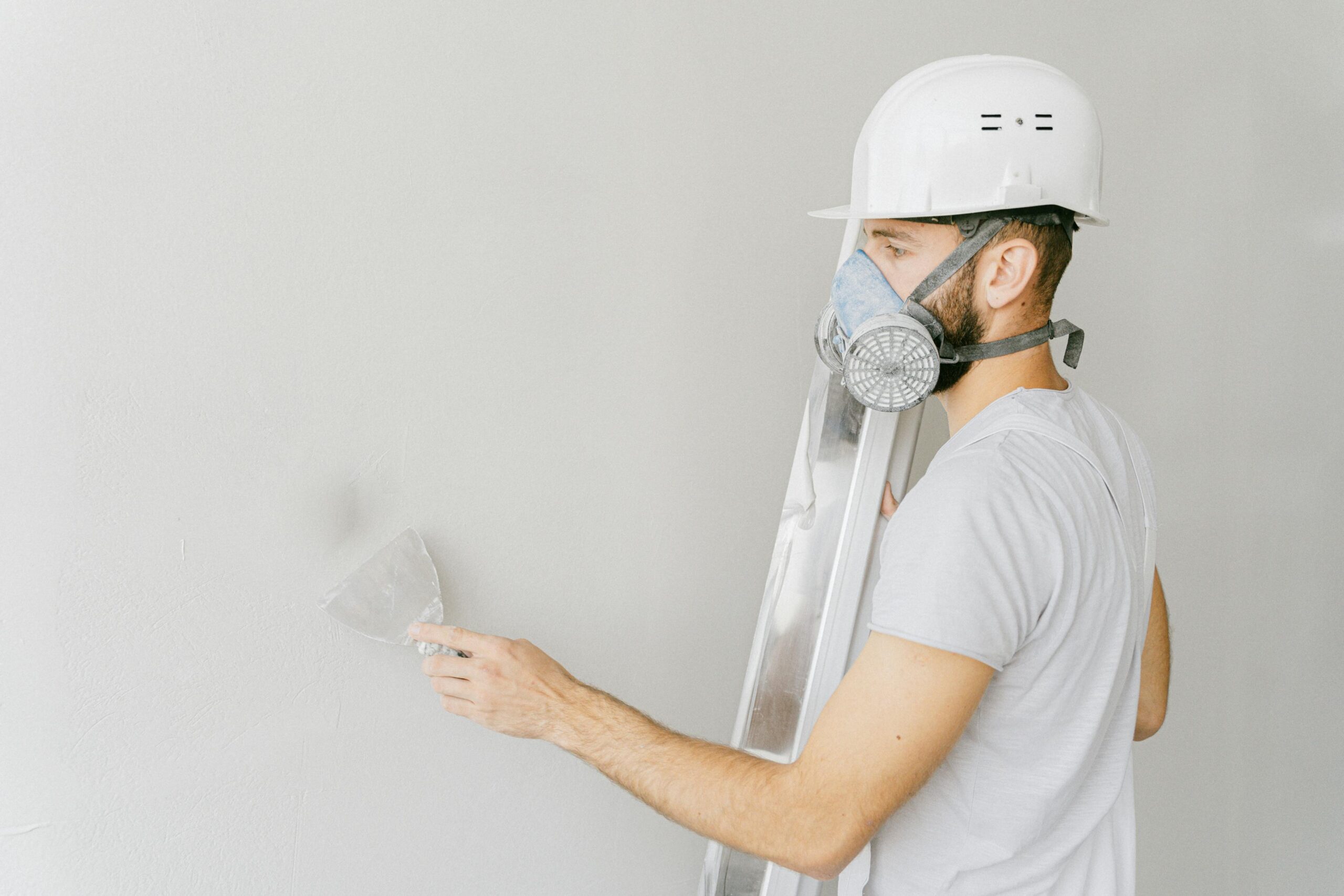
The end result you’re after is a wall surface so flush and even that the crack disappears completely under paint. Learning to fill and sand small drywall cracks correctly takes one careful run-through to get right, and most repairs can be completed in under an hour once you understand the sequence. If you’re not yet certain whether your crack is cosmetic or structural, confirm that before starting — this guide picks up at the point where you’ve already made that call and are ready to fix it.
Disclosure: This article contains affiliate links. If you purchase through these links, we may earn a small commission at no extra cost to you. As an Amazon Associate, we earn from qualifying purchases.
What You Need Before You Fill and Sand Small Drywall Cracks
Gather everything before you start. Stopping mid-repair to find a tool extends dry times unevenly and leads to inconsistent coats.
- Spackling compound — best for hairline and small cracks under a pencil-line width or shorter than 6 inches. It dries faster and shrinks less than joint compound. A pre-mixed product like DAP Alex Plus Spackling is a reliable homeowner-grade choice that goes on smoothly and sands easily once cured.
- Lightweight joint compound — the better option for cracks wider than a pencil line or longer than 6 inches. It feathers more smoothly over larger areas.
- Putty knife — 3-inch for applying filler in tight cracks, 6-inch for spreading and feathering the edges.
- 120-grit sandpaper — for initial smoothing of the cured compound.
- 220-grit sandpaper — for the final blending pass before primer.
- Sanding block or flexible sanding sponge — essential for even pressure. Folded sandpaper held in bare fingers creates uneven ridges that show under paint. A flexible sanding sponge conforms to slight wall curves and distributes pressure evenly, making it the better tool for sanding drywall crack repairs on anything other than a perfectly flat surface.
- Drywall-compatible primer (water-based) — required before painting over any bare compound. Not optional.
- Clean dry cloth or tack cloth — for removing sanding dust between steps.
- Mesh drywall repair tape — needed for cracks wider than 1/8 inch or any crack that has opened and closed before.
How to Prep a Small Drywall Crack So the Filler Actually Holds
Skipping prep is the single most common reason filling and sanding drywall cracks fails within months. The compound needs a clean, mechanically sound surface to bond to.
Step 1: Remove all loose material. Run your putty knife lightly along the full length of the crack. The goal is to dislodge any loose paint chips, dusty compound, or soft edges. Filler pressed over loose material will bond to that loose layer — not the wall — and peel away with it. When you’re done, drag a fingernail across the crack edges. They should feel firm and solid, not crumbly.
Step 2: Widen hairline cracks into a shallow V-shape. Use the corner of your putty knife or a utility knife to open a hairline crack slightly. Angle the blade inward on each side to create a shallow V-groove along the crack. This feels counterproductive, but it’s essential: a hairline crack gives filler almost no mechanical surface to grip. The V-groove creates a keyed channel that locks the compound in place rather than letting it sit on top of an almost-invisible seam.
Step 3: Vacuum or brush out the dust. Compound will not adhere properly to a dusty surface. Use a dry cloth, a stiff brush, or a vacuum with a brush attachment to clean the crack interior and the surrounding 2 inches of wall. The area should be completely clean and dry before you open the compound.
Step 4: Check for moisture. Press gently around the crack. If the drywall feels soft, the surface looks discolored, or the area feels noticeably cool compared to the surrounding wall, stop. Do not fill a crack over an active moisture problem — the repair will fail, and you risk concealing an issue that will cause more damage if left unaddressed.
How to Fill Small Drywall Cracks Correctly (And Why Thin Coats Matter)
The core technique error when you fill and sand small drywall cracks is applying too much compound in one pass. Thin coats dry evenly, shrink predictably, and sand cleanly. Thick coats trap moisture, crack as they cure, and require far more sanding work.
Step 1: Load the putty knife with a small amount. For a 6-inch crack, start with a marble-sized amount of spackling compound on the blade. You can always add more. Excess compound means more shrinkage, more sanding, and greater risk of the drywall crack repair failing as the compound cures.
Step 2: Press the filler into the crack. Hold the putty knife at a low angle — roughly 30 degrees to the wall surface — and drag it firmly across the crack in a single direction. Apply consistent downward pressure so the compound is pushed into the void, not just wiped over the surface. The goal at this stage is to fill the channel, not to build height above it.
Step 3: Scrape off the excess in one pass. Tilt the knife to nearly flat — 70 to 80 degrees to the wall surface — and make one clean scraping pass across the repair. What remains should be a thin skim coat that sits barely above the wall surface. Less is more here.
Step 4: Let the first coat dry fully. Check the product label for dry time. Most spackling compounds dry in 1 to 4 hours depending on humidity and temperature. Do not sand a coat that isn’t fully dry — it will tear and smear, creating a textured problem that’s harder to correct than the original crack.
Step 5: Apply a second coat if a depression remains. Spackling shrinks as moisture leaves it. A slight dip along the crack line after the first coat dries is normal. Apply a second thin coat using the same technique. Most hairline repairs need two coats. Deeper or wider cracks may need three.
For cracks wider than 1/8 inch: Before your first coat, press a strip of mesh drywall repair tape into the crack. Smooth it flat with the putty knife, then apply compound over the tape in thin passes. The tape bridges the gap and prevents the crack from reappearing as the house shifts seasonally.
How to Sand a Drywall Crack Repair Smooth Without Damaging the Wall
Sanding drywall cracks smooth requires patience with timing and precision with pressure. Rushing either creates more work. The goal is a flush, even surface where the filled area is indistinguishable from the surrounding wall.
Step 1: Wait for full cure — not just dry. A compound surface can look and feel dry while still being soft underneath. Follow the cure time listed on the product, not just the dry time. In humid conditions or cooler rooms, add 1 to 2 hours to the stated timeframe before touching sandpaper to the surface.
Step 2: Start with 120-grit on a sanding block. Hold the sanding block flat against the wall and use light circular strokes. Stay within 2 to 3 inches of the repair edge at this stage. Applying too much pressure or working too wide risks gouging the surrounding wall surface. When you fill and sand small drywall cracks, this controlled approach at the 120-grit stage determines how much final blending work you’ll need to do.
Step 3: Feather the edges outward. This is what separates a visible patch from an invisible repair. Sand outward from the center of the repair so the edges of the compound gradually taper to nothing against the surrounding wall. Run a flat hand across the area. You should feel no ridge, no raised lip, and no depression. If you feel a slight high point at the edge, sand outward from that spot until it disappears.
Step 4: Switch to 220-grit for the final pass. The 120-grit leaves fine scratches in the compound surface. Those scratches will show through paint if you don’t remove them. One or two light passes with 220-grit across the full repair area is enough. Don’t press hard — you’re refining, not removing material at this point.
Step 5: Wipe the surface clean. Use a dry cloth or tack cloth to remove all sanding dust. Avoid a damp cloth — moisture will raise the surface fibers of the compound and undo the finish you just created.
Result check: Hold a flashlight at a low angle parallel to the wall surface (called raking light). Under raking light, any ridge, depression, or scratch that remains will cast a visible shadow. The repair area should look completely flush. No crack line, no raised edges, no low spots.
Getting the Repaired Drywall Crack Paint-Ready
Step 1: Prime before painting — without exception. Bare spackling compound and joint compound are porous. Paint applied directly over bare compound soaks in unevenly and dries to a dull, flat patch surrounded by the sheen of the existing wall. This effect is called flashing, and it’s visible even when the paint color is a perfect match. Apply one coat of drywall-compatible water-based primer to the repaired area and 2 to 3 inches beyond its edge. Let it dry completely before painting.
Step 2: Check again under raking light after priming. Primer has a different reflectivity than bare compound and will reveal small surface imperfections that sanding missed. If you see a low spot or a faint ridge now, sand lightly with 220-grit, wipe clean, and apply a second spot coat of primer to that area only. This second raking-light check is what separates a truly paint-ready drywall crack repair from one that will show faintly under a fresh coat of paint.
Step 3: Match your paint sheen. Eggshell on eggshell, satin on satin. A flat paint touch-up on a satin-finish wall will be visible regardless of how well the color matches, because the sheen difference creates a dull patch in certain light.
Step 4: Feather the paint edge. Don’t cut a sharp edge around the primed spot. Feather the paint outward 4 to 6 inches beyond the primed area so the transition is gradual. If the wall is more than one to two years old, be prepared for the possibility that a full wall repaint between corner edges is needed for a truly seamless result — older paint fades, and even same-batch touch-up paint rarely matches exactly.
Why Drywall Crack Repairs Fail — and How to Avoid It
These are the most common reasons a repair looks good initially and fails within weeks or months:
- Skipping the V-groove on hairline cracks — filler sits on top of the crack with no mechanical grip and peels or re-cracks within months, especially as temperature and humidity shift seasonally.
- Applying one thick coat — thick compound traps moisture in the center while the outside cures, causing uneven shrinkage and internal cracking. Two or three thin coats always outperform one heavy one. This is the most consistent failure point when homeowners attempt to fill and sand small drywall cracks for the first time.
- Sanding before full cure — partially cured compound tears under sandpaper, creating a rough, pitted surface that requires stripping back and starting over.
- Skipping primer — causes flashing every time, even on a perfectly sanded surface. There is no paint formulation that eliminates the need for primer over bare compound.
- Accepting a recurring crack — if the same crack reopens within 6 to 12 months of a repair, it is responding to something: seasonal structural movement, moisture cycling, or a failing drywall joint beneath the surface. A crack that keeps coming back is telling you something the filler cannot fix. At that point, a professional assessment is worth the cost.
Frequently Asked Questions About Filling and Sanding Drywall Cracks
Can I use caulk instead of spackling compound to fill a drywall crack? Caulk is flexible and designed for joints between two different materials — like where a wall meets a window trim — not for mid-wall drywall crack repair. It doesn’t sand cleanly, it won’t accept paint the same way compound does, and it tends to yellow or shrink visibly over time on interior wall surfaces. Use spackling compound or lightweight joint compound for any crack in the field of a drywall panel.
How long should I wait between coats of spackling? Most pre-mixed spackling compounds need 1 to 4 hours between coats under normal indoor conditions (65–75°F, moderate humidity). Color-indicating formulas like DAP Alex Plus turn white when ready to recoat, which removes the guesswork. In humid rooms or during cold weather, allow extra time — a surface that looks dry may still be soft underneath. Always check the product label for the manufacturer’s stated dry time.
Do I need to sand between coats or only after the final coat? For most small drywall crack repairs, light sanding between coats is not necessary — just allow each coat to dry fully before applying the next. However, if the previous coat dried with a noticeable ridge or drip, a quick pass with 120-grit before the next coat will prevent those imperfections from compounding. Always do a thorough sand after the final coat using the 120-grit to 220-grit progression described above.
What grit sandpaper should I use on a drywall crack repair? Use 120-grit sandpaper for the initial smoothing pass after the final coat of compound has fully cured. This removes the bulk of the excess material and begins feathering the edges. Follow with 220-grit for the final finishing pass to eliminate fine scratches left by the coarser grit. Skipping straight to 220-grit on a rough surface wastes time; skipping the 220-grit before priming leaves scratches that show under paint.
Why does my drywall repair show through paint even after sanding? The most common cause is skipping primer. Bare compound is porous and absorbs paint at a different rate than the surrounding wall, leaving a dull flat patch called flashing even after the paint dries. The second most common cause is sanding marks — fine scratches from 120-grit that weren’t smoothed out with a 220-grit pass. Always prime bare compound before painting, and always finish with 220-grit before priming.
Can I skip primer and just paint over spackling? No. Primer over bare compound is not optional. Paint applied directly over unprimed spackling or joint compound will flash — the repaired area will look dull and flat compared to the surrounding wall, and this will be visible under almost any lighting condition. A small can of drywall-compatible water-based primer is inexpensive and covers most DIY repairs with a single coat.
How do I know if a small crack is too big to handle without mesh tape? If the crack is wider than 1/8 inch at any point, or if it has visibly opened and closed before (indicated by old paint cracking or layered compound along the edges), use mesh drywall repair tape before applying your first coat of compound. The tape bridges the gap and prevents the crack from reappearing as the house moves with seasonal temperature and humidity changes. Cracks that are hairline or narrow throughout can typically be filled without tape.
What does it mean if the same crack keeps coming back after I fill it? A crack that reopens within 6 to 12 months after a proper repair is responding to movement — seasonal expansion and contraction, a failing taped drywall joint beneath the surface, or a moisture problem driving the drywall to cycle between wet and dry. Filling it again without addressing the underlying cause will produce the same result. If a crack has returned more than once, it’s worth having the wall assessed before attempting another cosmetic repair.