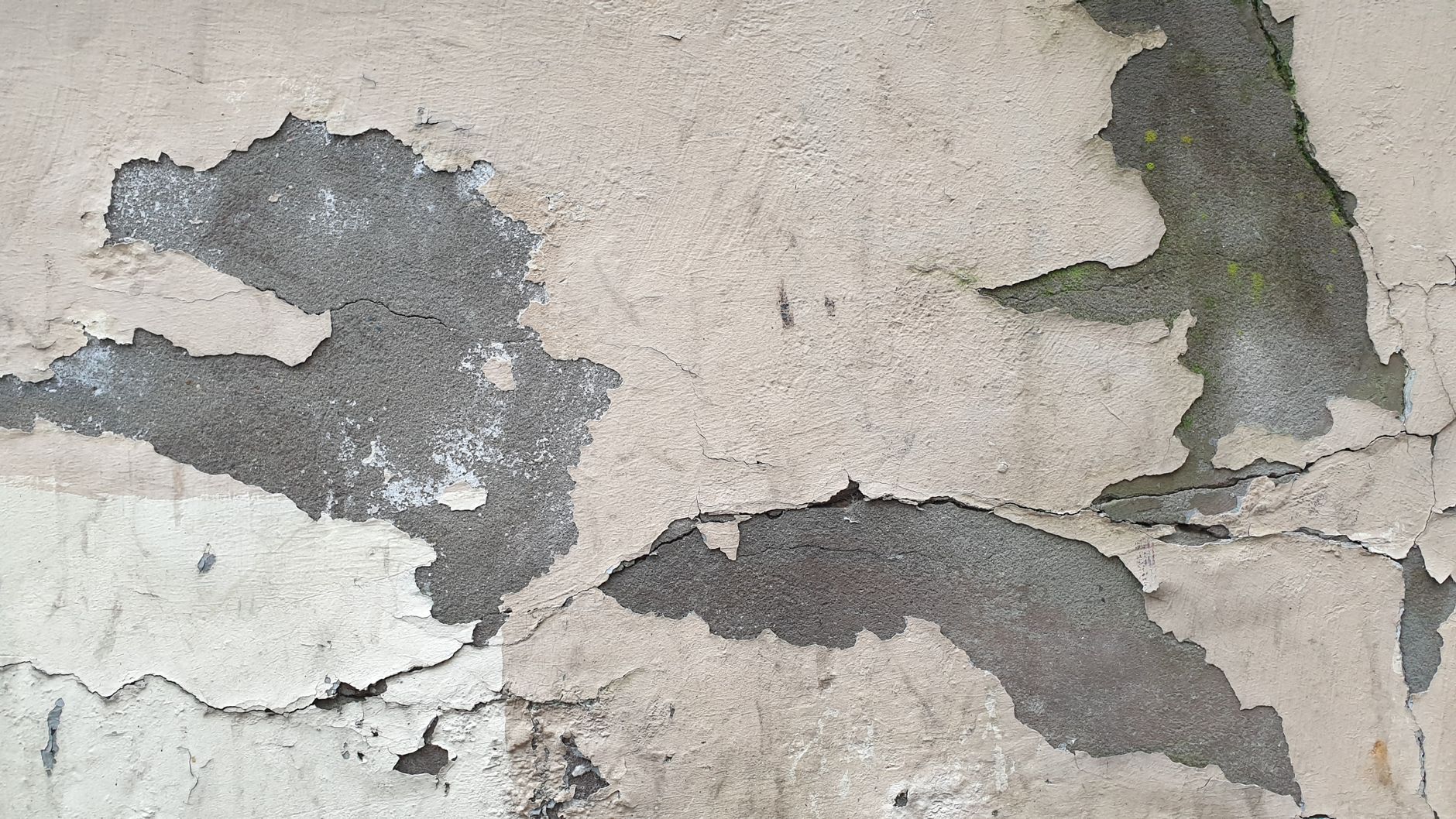

If you have noticed a crack in ceiling sagging or bowing, stop. Before you grab a ladder, poke at it, or reach for filler — read this first. A crack in ceiling sagging or bowing is not the same problem as an ordinary hairline crack. The first decision you need to make is not how to fix it. It is whether the area beneath it is safe to be in.
This article is a decision tree, not a repair guide. Work through it in order.
Disclosure: This article contains affiliate links. If you purchase through these links, we may earn a small commission at no extra cost to you. As an Amazon Associate, we earn from qualifying purchases.
Why a Sagging or Bowing Ceiling Crack Is Different From a Normal Ceiling Crack
Hairline cracks, paint cracks, and minor settling cracks are extremely common in residential ceilings. Most of them are cosmetic. They happen because houses move with temperature changes, and they rarely indicate anything urgent.
A crack combined with sagging or bowing is in a different category entirely. That combination means the ceiling material is physically separating from whatever is holding it up. The crack is not just a surface symptom — it is a sign that something structural to the ceiling assembly has failed or is failing.
To understand what you are looking at, it helps to know which of three ceiling types you have:
- Drywall (gypsum board): The most common ceiling in homes built after the 1950s. Relatively lightweight panels fastened to ceiling joists with screws or nails. When it fails, it tends to tear and sag in sections.
- Plaster-on-lath: Found in most homes built before the 1950s. A dense, heavy plaster coat applied over narrow wooden strips (lath). It fails differently — sections delaminate and bow downward as the mechanical keys that grip the lath break down.
- Textured plaster (skip trowel or popcorn over drywall): A hybrid system. The base is drywall, but the texture layer adds weight and can separate independently.
Each material has a different failure mode, a different risk level, and a different repair path. Knowing which one you have matters before anything else.
What Causes a Crack in Ceiling Sagging or Bowing
Do not assume you know the cause before you have diagnosed it. These are four separate problems with different responses.
Cause 1 — Water Damage and Saturation
This is the most common cause of a sagging ceiling crack. A leak from above — a roof leak, a supply or drain pipe, a toilet or tub on the floor above — saturates the ceiling material. Waterlogged drywall or plaster loses its structural strength quickly and begins to sag under its own weight. The crack forms because the softened material can no longer hold its shape under that load.
A water-loaded ceiling can collapse without warning, especially if the sag has been building up over time. This is the scenario that warrants the most immediate caution.
Cause 2 — Plaster Key Failure
In plaster-on-lath ceilings, the plaster was originally applied so that it squeezed through gaps in the lath strips and hardened on the back side, forming small mechanical anchors called “keys.” Over decades, those keys crack and break — from age, vibration (heavy foot traffic above, slamming doors), or moisture cycling.
When the keys fail, sections of plaster lose their grip on the lath and begin to bow downward under their own weight. The surface may look nearly intact except for a crack and a visible bulge. Plaster is heavy — significantly heavier than drywall — and a falling section is a serious injury risk even when there is no active water involved.
Cause 3 — Structural Load or Framing Failure
If the ceiling is bowing downward due to pressure from above — damaged roof joists, added load from storage or equipment in the attic, or a failing beam — you are looking at a structural problem. This is the least common cause, but it is the most serious.
The crack pattern is different in this case. Structural load failure usually produces larger, irregular cracks that run across the ceiling rather than along a single joist line. You may also notice cracking at the wall-ceiling junction or doors and windows that have started to bind.
Cause 4 — Drywall Fastener or Adhesive Failure
Sometimes drywall was installed with too few fasteners, wrong fastener placement, or adhesive that failed over time. The panel gradually pulls away from the framing and begins to bow downward. There may be no obvious external cause — no leak, no structural issue, just poor original installation.
This is more common in rooms with significant temperature cycling, like a garage, but it can happen anywhere. The sag tends to follow the joist spacing pattern rather than occurring in an irregular shape.
Identifying which of these four causes applies to your crack in ceiling sagging or bowing determines everything about what comes next.
How to Read What a Sagging or Bowing Ceiling Crack Is Telling You
Work through these steps before you do anything else.
Step 1 — Stay Out of the Area Directly Beneath the Sag
Before you approach the ceiling, look at it from the doorway. If the sag is pronounced — visibly drooping more than an inch or two — or the crack is wide and runs in multiple directions, do not walk under it. A saturated drywall ceiling or a failed plaster section can collapse without giving you any further warning.
Step 2 — Identify the Shape and Location of the Sag
The shape tells you a lot:
- A dome-shaped bulge with a crack at the apex strongly suggests water pooling. Picture a bag of water hanging from the ceiling — that is essentially what is happening.
- A gradual bow across a wider area suggests plaster key failure or framing deflection. There is no single central low point.
- A sag that follows a straight line along a joist suggests fastener failure or possible joist damage along that line.
Step 3 — Look for Moisture Evidence
From a safe distance, check for staining around the crack and sag. Yellow, brown, or rust-colored rings, bubbling paint, or peeling paint near the crack are signs of active or previous water damage. If the ceiling is directly below a bathroom or kitchen, a plumbing leak is the first assumption until you rule it out.
Absence of staining does not mean no moisture. A slow leak above insulation may soak the ceiling for weeks before any discoloration reaches the surface.
Step 4 — Determine the Ceiling Material
From a safe position, use a broom handle to gently tap the ceiling away from the sag — not directly under it. Drywall sounds hollow. Plaster-on-lath sounds denser and duller. Plaster that has separated from its lath will sound noticeably hollow compared to areas that are still bonded. It may also produce a slightly crinkled or papery response.
This matters because plaster weighs two to three times more than drywall per square foot. A falling plaster section is significantly more dangerous than drywall, even at a modest size.
Step 5 — Read the Crack Pattern
- Long crack running parallel to joists: Likely fastener failure or a joist-line issue.
- Circular or dome crack around a central low point: Consistent with water pooling.
- Spiderweb cracking radiating outward from a central point: Classic pattern for plaster key failure.
- Cracks crossing multiple joist lines irregularly: Raises concern for structural load or framing failure.
What to Do Right Now If You Have a Ceiling Crack With Sagging or Bowing
Once you have made an initial assessment from a safe distance, here is what to do — and what not to do.
Do:
- Clear everything out from beneath the sag. Remove furniture, valuables, and anything that could cause a secondary hazard if the section falls.
- If moisture is involved, locate and stop the water source first. Nothing else improves until the water stops.
- Document the sag with photographs. Include something for scale — a ruler, a coin, anything that shows the depth of the bow. This is useful for a contractor, a structural engineer, or an insurance claim.
- Use a precision stud finder at the edges of the sag (not directly below it) to identify where ceiling joists are relative to the affected area. This information is useful for any contractor or repair work that follows.
Do not:
- Prod, poke, or press a heavily saturated or severely bowing ceiling. Physical disturbance is enough to trigger collapse.
- Apply a patch or filler over a bowing crack. It will not hold, it will not address the cause, and it creates false confidence while the underlying problem continues.
- Ignore a sag that is increasing. A ceiling that is actively changing is moving toward failure.
When a Cracked Sagging Ceiling Is a Structural Emergency
This is where you decide whether to call a professional immediately.
Call a structural engineer or licensed contractor right away if:
- The sag is more than 1–2 inches of visible drop
- Cracks run across multiple joists in irregular patterns
- The bowing is spreading or getting worse over days
- You hear cracking, popping, or settling sounds from above
- The ceiling feels soft when gently touched with a tool at the safe edge of the affected area
- The home has had recent roof damage, flooding, or known structural work
Leave the room and do not re-enter until a professional has assessed it if:
- The sag is large, appears rapid, or is visibly increasing
- There is separation opening up at the wall-ceiling junction
- Multiple cracks are converging toward a central point
To be direct: do not attempt to DIY a structural ceiling failure. Ceiling collapses cause serious injuries. If the cause is joist damage, significant water loading, or a large area of plaster mass failure, this is outside the scope of homeowner repair. Call someone who can assess it safely.
What Happens After You Have Confirmed the Ceiling Is Safe to Approach
If you have worked through the diagnosis and the situation is limited — a small, stable area, a resolved leak, or confirmed minor fastener failure — here is what the repair path looks like for each scenario.
For a Small Area of Plaster Key Failure (Confirmed Stable and Dry)
A small contained section of separated plaster — roughly 12 inches or less — can sometimes be re-secured using plaster washers and drywall screws before the section falls entirely. Plaster washers are wide, thin discs that spread the screw’s holding force across a larger area of plaster surface. This prevents the screw from pulling through. Use these rather than adhesive alone — you want mechanical hold, not just glue.
If the area is larger than about 12 inches across, professional repair is the safer route. Plaster that has separated across a larger span is more likely to crack further when disturbed.
For a Dry, Stable Sag From a Resolved Water Leak
First, confirm the water source is completely resolved. Then have the ceiling evaluated for structural integrity before any patching begins. A drywall ceiling that has sagged under water weight and dried in a bowed position has permanently lost stiffness in that section. It needs to be cut out and replaced, not patched over. A drywall patch kit is appropriate for small-section replacement after the damaged material has been removed — not applied on top of it.
For Fastener Failure
If the drywall is otherwise undamaged and the sag is minimal, reinstalling drywall screws at correct joist locations along the bow perimeter can re-secure the panel. Use a stud finder to locate the joists accurately before driving any screws. Driving into empty space achieves nothing and can worsen the situation.
How to Prevent a Crack in Ceiling Sagging or Bowing
Most serious causes of a sagging ceiling crack are preventable with routine attention.
- Inspect ceilings below bathrooms, kitchens, and rooflines once a year — especially in spring after snow melt and after any roof work. Catch it early.
- Fix plumbing leaks as soon as you find them. A slow drip does far less damage than one running undetected for weeks.
- In older plaster homes, pay attention to hollow-sounding sections. If you notice areas that have changed, or hairline cracks that are spreading, have a professional assess the plaster before a section fails.
- Keep attic ventilation clear. Blocked roof vents trap moisture that condenses on cold framing and drips. This is a common cause of ceiling water damage with no obvious active leak above.
- Keep your attic access clear so you can inspect for water intrusion after heavy rain or significant snow melt. A flashlight inspection twice a year can catch roof leaks long before they reach your ceiling.
Frequently Asked Questions
Can a sagging ceiling fix itself once it dries out? No. A ceiling that sagged under water weight has lost structural integrity. Drying removes the moisture but does not restore the material’s strength or return it to its original position.
How much ceiling sag is dangerous? Any visible sag combined with a crack should be taken seriously. A sag greater than an inch or two — or one that is increasing — should be treated as a potential collapse risk until proven otherwise.
Is a bowing ceiling always a structural problem? Not always. Plaster key failure and water damage are more common causes than framing failure. But the risk of the section falling remains regardless of the cause — that is the practical concern either way.
Can I patch over a cracked bowing ceiling? No. Applying a patch over a bowing crack does not address the cause and will fail. It also delays proper diagnosis and gives false confidence while the underlying problem continues.
My ceiling is bowing but there is no stain — could it still be water? Yes. A slow leak above attic insulation may saturate the ceiling material without discoloring the surface for weeks. No staining does not rule out moisture.
Who should I call — a roofer, a plumber, or a contractor? It depends on the cause. If the water source is unclear, start with a general contractor or water damage specialist who can identify the source. A plumber is the right call if a pipe leak is confirmed. If the framing is suspected, you need a structural engineer.
The bottom line: a crack in ceiling sagging or bowing is telling you something real. Work through the diagnosis methodically, stay out from under serious sags, stop the water source if there is one, and do not patch over a problem you have not confirmed. When in doubt, call a professional. The cost of an inspection is far less than a ceiling section on the floor.

DIY Home Repair & Plumbing