If your lights flicker when the AC turns on, the most common cause is something called inrush current. That’s the brief, high-demand surge of electricity the compressor needs to go from stopped to running. For most homeowners, this flicker is completely normal and harmless. But “most of the time normal” isn’t always the answer, and knowing how to tell the difference matters.
The diagnostic question is simple: How bad is the flicker, and what does it do afterward? A brief dim that recovers quickly is very different from a severe drop that lingers or gets worse each season. That’s what separates a benign quirk from something worth calling an electrician about.
Disclosure: This article contains affiliate links. If you purchase through these links, we may earn a small commission at no extra cost to you. As an Amazon Associate, we earn from qualifying purchases.
What Normal AC Startup Flicker Actually Looks Like
The AC compressor is one of the largest motor loads in your home. When it starts, it briefly draws far more current than it needs to run — often three to five times its running load. That spike pulls voltage down for a moment across your home’s circuits. Lights dim or flicker for a second or two, then come back to full brightness.
Normal flicker lasts no more than 1 to 3 seconds. If it’s done and gone before you’ve finished noticing it, that’s the benign version.
Here’s what it looks like:
- Lights dim briefly — 1 to 3 seconds — right when the compressor kicks on
- Brightness returns fully to normal once the compressor is running
- The flicker happens only at startup, not while the AC is running
- No buzzing, no burning smell, and no breaker trips
- The behavior has been consistent for years and hasn’t gotten worse
If that matches exactly what you’re seeing, you’re likely fine. The rest of this article covers what happens when it doesn’t match — and what to do about it.
When Lights Flicker When the AC Turns On: Signs of a Real Problem
Don’t mix these up. Each cause is distinct, has different symptoms, and points to a different fix.
Cause 1: Significant or Worsening Voltage Drop
This is more than a brief dim. The lights go noticeably dark — not just a flicker — and take longer than two or three seconds to fully recover. Or the problem used to be mild and has gotten worse over time.
Worsening voltage drop under AC startup load usually means one of two things: the electrical service feeding the AC is undersized for the demand, or there’s a loose connection somewhere that gets worse when current spikes. Neither gets better on its own.
Cause 2: Loose Connection at the Panel or AC Disconnect
Here the symptom pattern is more localized. Lights in one part of the house flicker more than others. The flicker may also happen during AC operation, not just at startup. You might hear buzzing from the panel when the AC runs.
Take this one seriously. Loose connections under high current draw generate heat. That heat can damage wiring insulation over time. In severe cases, it’s a fire risk.
Cause 3: Failing AC Capacitor
The capacitor helps the compressor start cleanly. When it weakens, the compressor struggles to get going. It draws even higher inrush current than normal in the process. The result is a more dramatic or prolonged flicker than you used to see.
Listen at the outdoor condenser when the AC kicks on. A healthy start sounds clean and happens within one to two seconds. A failing capacitor often causes a hum or clicking before the compressor engages, or the unit hesitates or sometimes fails to start at all. If you’re hearing that, the harder light flicker is a symptom of the capacitor problem — not a separate wiring issue.
You might also notice a different kind of sound. If the AC is making a AC unit making a hissing or bubbling sound, that points to a refrigerant issue rather than a capacitor — a different problem that also warrants an HVAC technician.
Cause 4: Undersized Electrical Service
This one usually appears after a new, larger AC unit is installed in an older home. Many pre-1980s homes have 100-amp service panels. If you’ve added a modern central AC unit to one of these homes, the total demand may be pushing the limits of what that service can supply.
This isn’t a fault you can tighten or replace — it’s a capacity issue. It requires a licensed electrician to assess whether a service upgrade is needed. If this sounds like your situation, skip ahead to the escalation triggers section below.
How to Diagnose Which Problem You Have: Step-by-Step
Work through this before you do anything else.
Step 1: Observe the flicker pattern carefully
- Does it happen only at startup, or also while the AC runs?
- Which lights flicker — one room, one side of the house, or everywhere equally?
- Has it gotten worse recently, or after an AC service visit?
- Any sounds — buzzing, clicking, humming — when the AC starts?
Step 2: Listen at the outdoor condenser
Stand near the unit when the AC cycles on.
- Clean startup within 1–2 seconds = normal motor behavior
- Hesitation, humming, or repeated clicking before startup = possible capacitor issue; call an HVAC technician
Step 3: Observe the electrical panel — look only, don’t touch
- Look at the panel cover exterior for scorch marks, discoloration, or melted components
- Listen for buzzing or crackling when the AC starts — if you hear this, stop and call an electrician
- Note whether the AC breaker (a double-pole breaker — two switches tied together) has ever tripped when the AC starts
Step 4: Assess severity and trend
- Brief, consistent, non-worsening dim at startup → likely normal
- Severe, prolonged, worsening, or newly appeared flicker → worth investigating
DIY Checks You Can Safely Do Before Calling Anyone
The DIY ceiling on this problem is low. Most real fixes require either an electrician or an HVAC technician. But there are a few safe checks you can do yourself.
Inspect the AC disconnect box
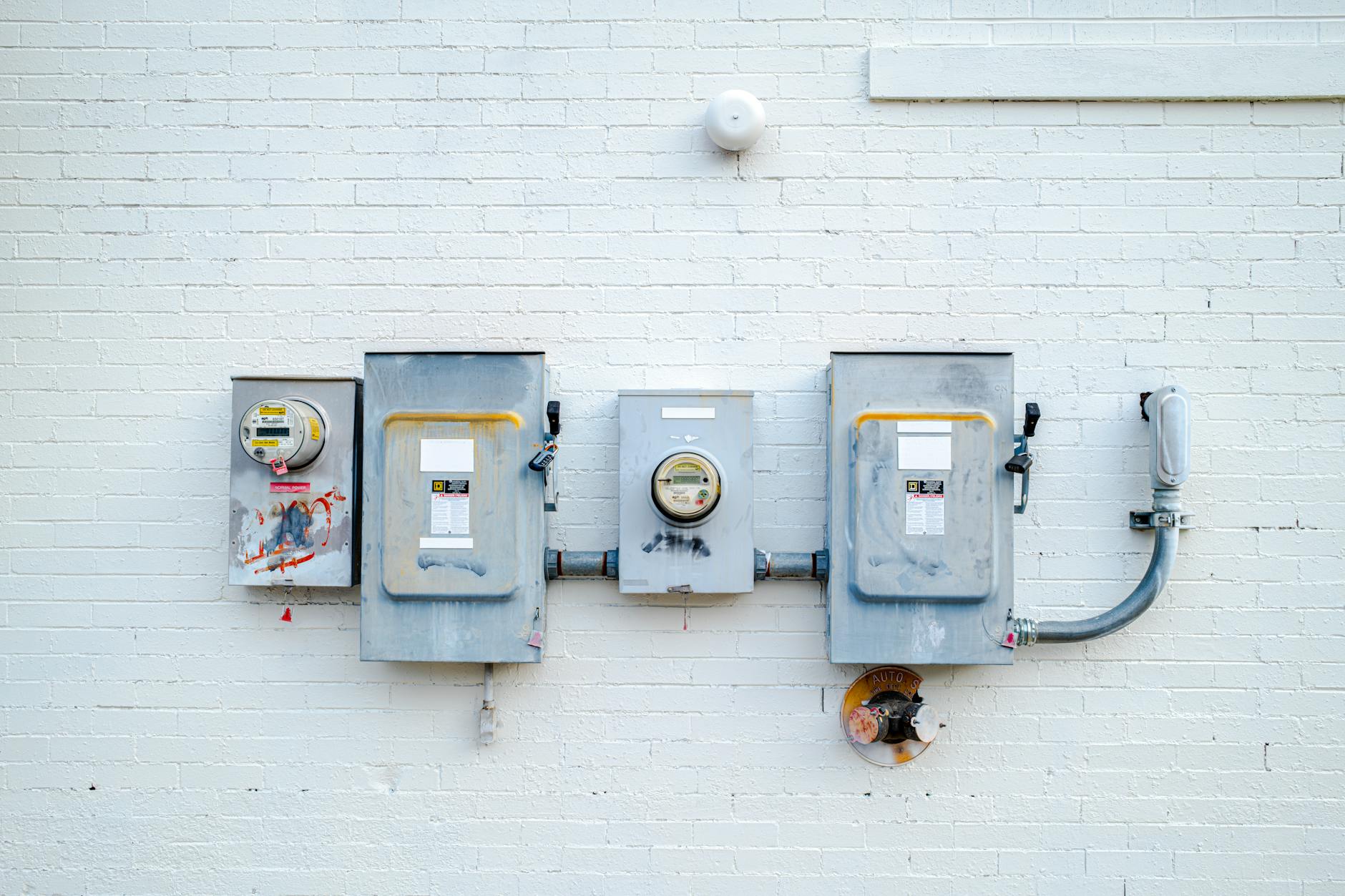
This is the metal box mounted near the outdoor condenser unit. With the AC off at the thermostat, look at the outside of the box for scorch marks or heat damage. Do not open the box or touch any wiring inside — this is a visual check only.
Check the AC breaker
With the panel door closed, find the double-pole breaker labeled for the AC circuit. If it feels warm to the touch, or if it has ever tripped when the AC started, that needs professional attention. Don’t open the panel or touch any connections yourself.
Use a non-contact voltage tester or outlet tester
A non-contact voltage tester can confirm live current at outlets near the AC circuit. An outlet tester can verify a circuit is wired correctly if the AC connects to an accessible outlet. Both are inexpensive and safe for homeowners to use.
Be clear on what these tools can’t do: neither one measures voltage drop, and neither can detect a loose connection inside the panel. They’ll rule out basic wiring issues, but they won’t diagnose the root cause of serious AC-related flicker.
What NOT to do:
- Don’t open the main panel to inspect or tighten connections — this requires a licensed electrician
- Don’t assume “it’s always done this” means it’s safe — consistent doesn’t equal harmless if the flicker is severe
- Don’t install a hard start kit without first confirming the capacitor is actually failing — it’s a fix for a specific cause, not a general solution
Escalation Triggers: When to Stop Diagnosing and Call a Professional
Call a licensed electrician if:
- The flicker is severe or has gotten noticeably worse over time
- Lights flicker during AC operation, not just at startup
- You smell anything burning when the AC starts
- You hear buzzing or crackling from the panel
- The AC breaker trips when the compressor starts
- Your home has a 100-amp panel and you’ve installed a newer, larger AC unit
- You see scorch marks or discoloration near the panel or disconnect box
Call an HVAC technician (not an electrician) if:
- The AC hums, clicks, or hesitates before starting
- The flickering is new and appeared after an AC service visit
- The compressor sometimes fails to start on the first try
If both are happening — struggling startup and significant light flicker — schedule both assessments. A failing capacitor increases inrush current, which stresses wiring that may already have a weakness. The two problems can make each other worse.
Prevention: How to Keep This From Getting Worse
A few simple habits go a long way:
- Have the AC capacitor checked annually as part of routine HVAC maintenance. A weak capacitor increases startup draw before it fails. Catching it early reduces electrical stress on your circuits.
- Ask your electrician to check panel connections during any future panel work, especially if the home is over 20 years old. Connection quality degrades over time, and it’s inexpensive to address during work that’s already scheduled.
- Before replacing an AC unit, confirm your electrical service amperage can handle the new unit’s startup requirements. Your HVAC installer should check this — don’t assume it’s being done.
- If the flicker is mild and has always been there, note it and monitor it seasonally. If it worsens after a season where nothing else changed, have it assessed. A steady baseline is reassuring. A changing one is a signal.
Frequently Asked Questions
Is it normal for lights to flicker when the AC turns on?
Yes — a short dim at startup is common and usually harmless. When the compressor starts, it draws a large surge of current for 1 to 3 seconds. That brief demand pulls voltage down across your circuits. Lights dim for a moment, then return to full brightness once the compressor is running. If that’s all you’re seeing, it’s likely normal inrush current behavior.
Why do my lights dim when the AC kicks on but not when other appliances start?
AC compressors have much higher startup current than most household appliances. A refrigerator compressor or a dishwasher motor draws a fraction of what a central AC compressor needs to go from stopped to running. That’s why the AC causes visible dimming when other appliances don’t — the startup demand is simply much larger.
Can a bad AC capacitor cause lights to flicker?
Yes. The capacitor helps the compressor start cleanly. When it weakens, the compressor struggles to get going and draws even higher inrush current than normal. The result is a more dramatic or longer-lasting flicker than usual. Listen for a hum, clicking, or hesitation at the outdoor condenser when the AC starts. Those sounds point to a capacitor issue.
Should I be worried if my lights flicker when the AC comes on?
It depends on severity, duration, and whether it’s getting worse. A brief, consistent dim that recovers in 1 to 3 seconds and hasn’t changed over the years is likely normal. A severe drop, a flicker that lasts longer than a few seconds, or a symptom that has worsened over time all warrant attention. Use the normal vs. problem framework in this article to assess which category you’re in.
Can an undersized breaker cause lights to flicker when the AC starts?
An undersized breaker will trip — it won’t just cause flickering. Flickering is about voltage drop, not breaker size. If the AC breaker is tripping when the compressor starts, that’s a separate and more urgent issue than dimming lights. A tripping breaker needs professional evaluation right away.
What does it mean if my lights flicker during AC operation, not just at startup?
Flickering during operation is not normal. Startup flicker is caused by inrush current, which resolves in seconds. If lights flicker while the AC is already running, the cause is likely a loose connection or another fault — not normal startup behavior. This is one of the escalation triggers in this article, and it warrants a call to a licensed electrician.
Summary
Lights that flicker when the AC turns on are, in most cases, a normal response to compressor inrush current. A brief dim at startup that recovers quickly and hasn’t changed over the years is not a fire hazard or an electrical fault — it’s just physics.
The situations that actually warrant attention are: severe or worsening voltage drop, flickering during AC operation rather than just at startup, signs of a failing capacitor causing harder starts, or an older home with undersized service struggling to handle a modern AC load. Work through the diagnostic steps above, use a non-contact voltage tester for safe circuit checks, and call a licensed electrician or HVAC technician if any of the escalation triggers apply. The diagnostic work you can safely do yourself is real — but so are the limits of it.

Home Electrical & Appliance Troubleshooting