Extension cord safety mistakes homeowners make are remarkably common — and remarkably easy to miss. Most people have never been taught how to use extension cords safely, and the result is a category of electrical fire hazard that hides in plain sight: under rugs, behind furniture, in garages, and in workshops. This list covers eight specific mistakes, what makes each one dangerous, and what to do instead.
Disclosure: This article contains affiliate links. If you purchase through these links, we may earn a small commission at no extra cost to you. As an Amazon Associate, we earn from qualifying purchases.
Mistake 1: Using an Indoor Extension Cord Outdoors — An Indoor Extension Cord Electrical Safety Failure
Indoor extension cords are built for controlled environments. They lack the weather-resistant insulation and reinforced jacket required for outdoor use. Even brief exposure to morning dew, rain, or temperature swings can degrade the insulation and create a shock hazard at the plug or along the cord.
Indoor extension cord electrical safety depends entirely on keeping these cords in the environments they were rated for. The moment you run one outside, you’ve removed the conditions the cord was designed around.
The fix is simple: look for cords labeled “W” or “Outdoor” on the packaging. These designations come from UL (Underwriters Laboratories), the organization that certifies electrical products for safety in the U.S. An outdoor-rated cord uses thicker, more durable insulation and comes with a three-prong grounded plug.
For any outdoor use — holiday lights, power tools, landscaping equipment — use a heavy-duty outdoor extension cord rated for exterior conditions. Check the packaging for the “W” rating and a minimum 12-gauge wire for anything beyond low-draw lighting.
Mistake 2: Running Extension Cords Under Rugs or Furniture
This is one of the more dangerous extension cord fire hazard habits because there is no visible warning. When a cord is buried under carpet or pinched under a furniture leg, it cannot release heat the way an open cord can. Pressure also cracks the insulation over time.
Here’s why it’s hard to catch: a breaker trips when current exceeds the circuit’s rating. It does not trip when a cord slowly overheats under a rug at a load well within the rated amperage. The damage builds quietly. By the time it becomes a problem, you may find arcing or smoldering inside the carpet — with no prior warning.
The right answer is not a flatter cord. It’s repositioning the furniture so the cord runs along a baseboard, or having a licensed electrician add an outlet where you actually need one.
Mistake 3: Daisy Chaining Power Strips — A Danger Most Homeowners Miss
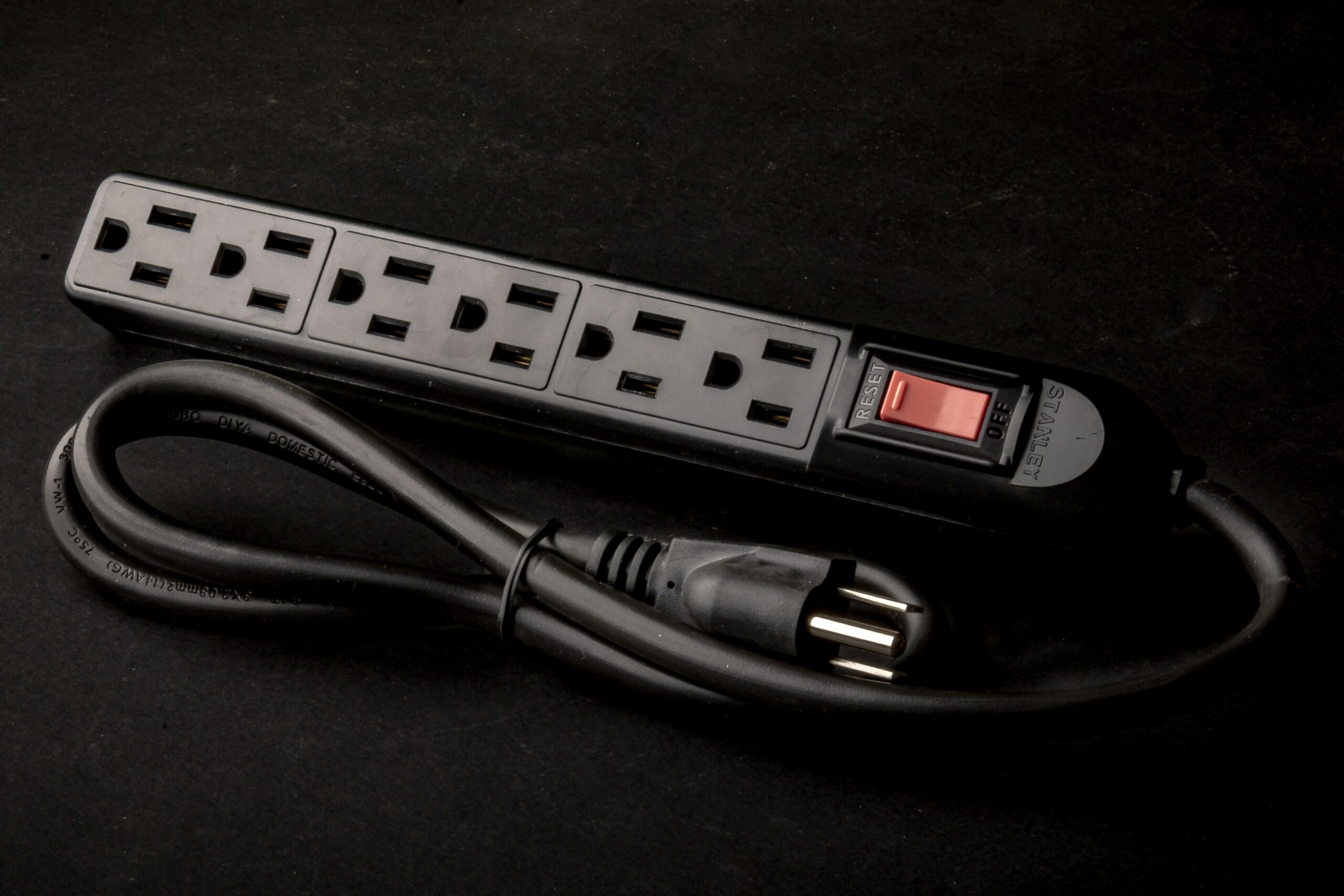
Daisy chaining power strips is one of the most misunderstood power strip safety mistakes homeowners make. The logic seems reasonable: more strips mean more outlets. But outlet capacity doesn’t multiply. The first strip is still drawing from one 15-amp outlet, and the second strip just hides how much total load is present.
The danger of daisy chaining power strips is that it obscures actual load while adding undersized connection points that were never tested for the combined configuration. Your breaker may not trip because the total draw might not exceed 15 amps. But if the wiring inside the strips can’t handle that load at those connection points, heat builds up somewhere you can’t see.
Most standard power strips are rated at 15 amps — the same as the outlet feeding them. Chaining them doesn’t create headroom. It creates confusion.
UL does not certify daisy-chained power strips. That’s not a technicality. It reflects the fact that the configuration introduces failure modes the individual components were never tested to handle.
Mistake 4: Overloading a Power Strip With High-Draw Appliances
Space heaters, air fryers, toaster ovens, and window AC units are not power strip appliances. These devices draw sustained high current — often 12 to 15 amps on their own — and should plug directly into a wall outlet.
Marketing language creates real confusion here: a surge protector is not the same as a heavy-duty power strip. A surge protector contains a MOV (metal oxide varistor) that absorbs brief voltage spikes. That’s useful for computers and TVs. It does not increase the amperage capacity of the strip or make it safer for high-draw appliances.
A quality surge protector with a joule rating of 1,000 or higher is a sensible choice for a home office or entertainment setup. Look for one with indicator lights confirming the surge protection is still active — MOVs wear out after large spikes, and the strip becomes a plain power strip without any warning. But even the best surge protector is not the right plug point for a space heater.
Mistake 5: Treating an Extension Cord as a Permanent Solution — A Common Extension Cord Safety Mistake Homeowners Make
Extension cords are rated for temporary use. Running one permanently through walls, under flooring, stapled behind trim, or routed behind built-in cabinetry is a violation of the National Electrical Code — and a real fire risk. Cords inside walls generate heat with nowhere to go. They can’t be inspected for damage. Nobody knows they’re there until something fails.
If you’re routing the same cord to the same spot every week, that location needs a permanent outlet — not a longer cord. This is not a complicated electrical job. A licensed electrician can add a new outlet on an existing circuit in a few hours. (If you’ve run into other wiring issues in the same area, problems like a 3-way switch stopped working can often be addressed in the same visit.)
This is the one mistake on this list with a clear answer: stop improvising and call a professional. The cost of adding an outlet is modest. The cost of an electrical fire is not.
Mistake 6: Choosing the Wrong Cord Gauge — Another Extension Cord Safety Mistake Homeowners Often Make
AWG stands for American Wire Gauge. It measures wire thickness. The counterintuitive part: a lower AWG number means thicker wire. A 12-gauge cord has thicker conductors than a 16-gauge cord and can carry more current safely over longer runs.
Thinner wire heats up faster under load. That’s fine for a lamp or phone charger on a short 16-gauge cord. It becomes a problem when you’re running a shop vac or power saw on a thin cord stretched 50 feet across a garage.
A simple reference for common situations:
- 16-gauge cord: Lamps, fans, phone chargers, small electronics — up to about 25 feet
- 14-gauge cord: Vacuums, larger fans, power tools — up to 50 feet
- 12-gauge cord: High-draw tools, outdoor equipment, anything over 50 feet
For appliances and tools that draw real current, use a 14-gauge extension cord rated for heavier loads. The gauge is printed on the packaging and usually molded into the plug housing as well. If you’re stocking up on cords and other essentials, Best Home Repair Tools and Supplies for Homeowners is a useful reference for what’s worth keeping on hand.
Mistake 7: Using a Damaged or Recalled Cord Without Checking
Cracked insulation, bent prongs, a plug that feels warm to the touch, or any visible burn marks are not cosmetic issues. They are active hazards. A damaged cord goes in the trash — not back in the drawer for “low-draw stuff.”
Many homeowners also hold onto older power strips without knowing whether they were ever recalled. Some older strips — made before stricter UL standards — have been pulled for overheating or fire risks. If you have strips you can’t identify by brand or model, check the CPSC (Consumer Product Safety Commission) recall database at cpsc.gov before using them again.
Beyond visual inspection, keep a plug-in outlet tester to check for wiring faults at the outlets your power strips are feeding. A basic outlet tester plugs directly into the receptacle and uses indicator lights to flag common wiring problems — reversed polarity, missing ground, open neutral — in about three seconds. It won’t catch every issue, but it confirms the outlet itself is wired correctly before you start stacking load on it. For a broader look at what you can diagnose on your own, Common Electrical Problems Homeowners Can Troubleshoot Safely covers a range of issues beyond outlets.
Mistake 8: Skipping GFCI Protection in Kitchens, Bathrooms, or Garages
GFCI stands for Ground Fault Circuit Interrupter. It detects small imbalances in electrical current — the kind that happen when electricity finds a path to ground through a person — and cuts power in milliseconds. Standard extension cords and power strips offer none of this protection.
In any wet or damp location — a kitchen counter, bathroom vanity, garage, or outdoor outlet — GFCI protection is not optional. The NEC requires it in these locations for good reason.
If the outlet at the source already has GFCI protection (look for “Test” and “Reset” buttons on the face), any extension cord or strip plugged into it inherits that protection. If it doesn’t, the permanent fix is to replace the outlet with a GFCI outlet for kitchen or bathroom installation. A GFCI-equipped power strip is a secondary option, but replacing the outlet at the source is the more reliable long-term solution.
Note: A full guide to GFCI outlets — what they do, where they’re required, and how to install them — is a planned topic on this site. That internal link will be added once the article is live.
When the Real Fix Is a New Outlet
If you’ve worked through this list and recognized a pattern — the same extension cords going to the same spots every day — the issue isn’t the cords. It’s that your home’s outlet layout doesn’t match how you actually use the space.
Adding outlets is one of the more straightforward jobs a licensed electrician handles. On an existing circuit with capacity to spare, it can be done in a half-day visit at reasonable cost. That’s a better outcome than continuing to work around extension cord safety mistakes that compound over time. Identify the spots where you consistently rely on extension cords and make that the conversation when you call an electrician. If GFCI protection is part of what you need, flag that too — it’s worth addressing in the same visit before the work begins. If you’re also noticing other unexplained issues around the house, the Why Is This Happening in My House? Complete Home Problem Diagnosis Guide can help you identify what else may be worth looking into.
Frequently Asked Questions
Can I use a power strip in a garage or workshop? Yes, but it needs to be a heavy-duty strip. Don’t run high-draw tools from it. GFCI protection is strongly advised in any garage or workshop setting.
How do I know what gauge extension cord I need? Match cord gauge to the appliance’s wattage and the cord’s length. For most household appliances and power tools, a 14-gauge cord handles up to 50 feet. For high-draw tools or longer runs, use 12-gauge.
Is it safe to leave a power strip on all the time? It depends on the load and strip quality. High-draw appliances should be unplugged when not in use. Surge protectors degrade after large voltage spikes — once the MOV is spent, the strip no longer offers protection. They don’t last forever.
What’s the difference between a surge protector and a power strip? A surge protector contains a MOV that absorbs voltage spikes. A basic power strip does not. Price alone is not a reliable indicator — check the packaging for a joule rating. If there isn’t one, it’s a plain power strip.
Can an extension cord cause a fire if nothing is plugged into it? An unloaded cord carries no active fire risk. But physical damage — cracked insulation, pinched sections — can become a hazard when the cord is used again. Inspect cords before use, not just after a problem occurs.